ChatGPT links lost their tracking tag for a week, filing visits as Direct
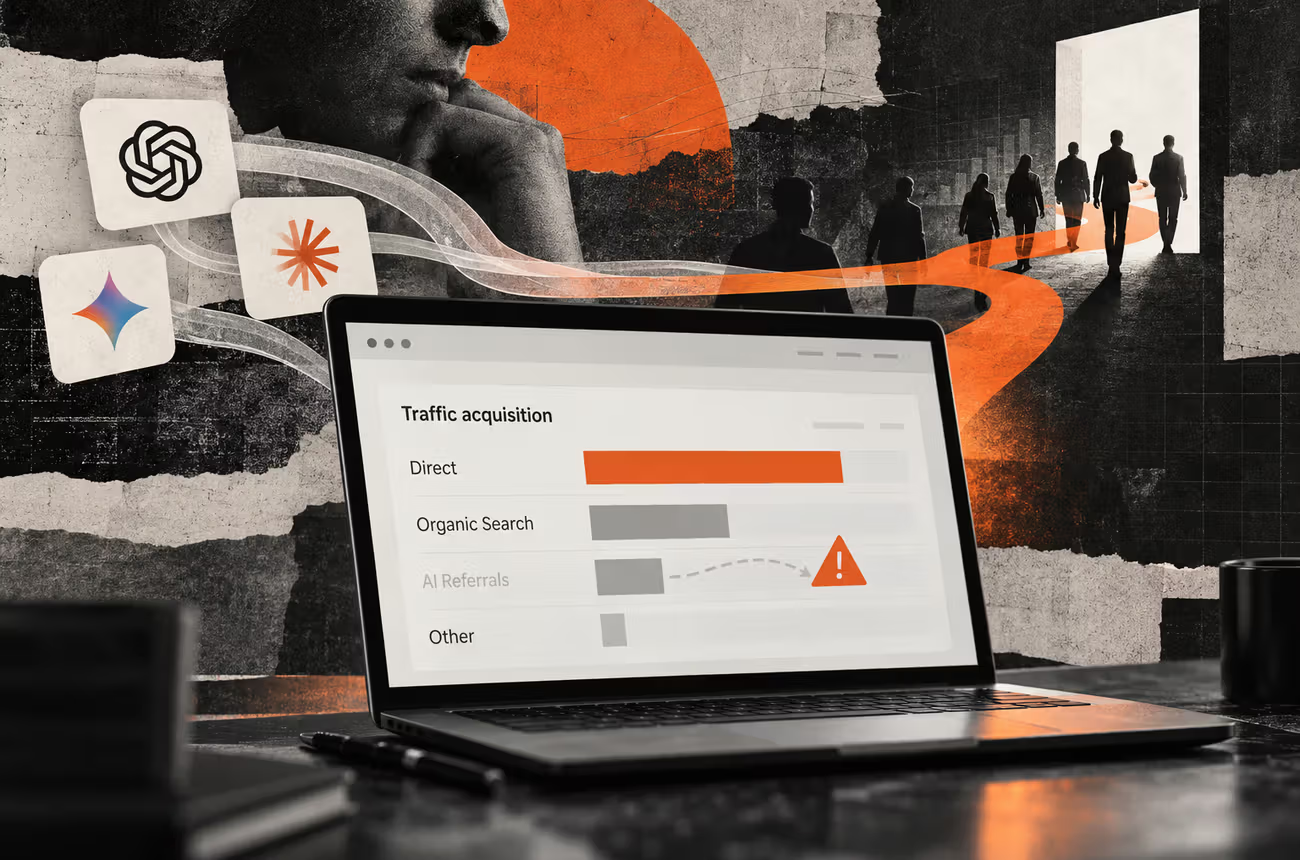
For about a week this month, many of the visitors ChatGPT sent to websites arrived unlabelled. From the evening of 8 October, as OpenAI’s GPT-6 reached ChatGPT’s free tiers, a large share of links in its answers stopped carrying the utm_source=chatgpt.com tag that analytics tools use to identify them, and most arrived without a referrer as well.
In dashboards it looked like a collapse. Reported ChatGPT referral sessions fell by roughly a third to a half across several independent datasets, while Direct traffic rose on the same pages. Cedric Huesler, senior director of product management at Adobe, wrote on LinkedIn that OpenAI told him on 14 October the missing tag was a known bug, and that a fix began rolling out early on 15 October. OpenAI has made no public statement.
The timing lands badly for month-end reporting. ChatGPT referrals are one of the few hard numbers B2B teams have to show that work on AI search visibility pays off, and AI-referred visitors tend to convert well, which makes the channel easy to defend in a budget review. October’s month-on-month figures will now show it down and Direct up for reasons unrelated to demand. The evidence points to visits that were mislabelled rather than lost, but attribution for 8–15 October will not come back.
What broke in ChatGPT’s links after GPT-6?
ChatGPT began opening many links in a new tab with a browser setting that withholds the referrer, and left off the utm_source tag, according to Huesler’s analysis as reported by Search Engine Roundtable and Search Engine Journal. With neither signal present, Google Analytics 4 has nothing to identify the source, so the session is counted as Direct. GA4’s AI Assistant channel, added in May 2026, has the same blind spot: an assistant visit with no tag and no referrer still lands in Direct.
The timing tracks the GPT-6 rollout. The model reached paid ChatGPT plans on 7 October, when LLM Pulse saw no change, and Free and Go users on 8 October. Huesler puts the break at about 2pm Pacific time, roughly 10pm in the UK, so British and European properties show it from 9 October.
Not every link was affected. Ethan Smith, chief executive of Graphite, found that inline links in answer text lost the tag while links in the Sources panel and shopping links kept it. Profound measured the share of ChatGPT answers containing at least one tagged source link at about 98% on 8 October, 75% on 9 October and 66% by 14 October. Over the same days, answers using Intelligent UI, the format for charts, comparisons and small tools that arrived with GPT-6, rose from 2% to about 35%. Profound presents the link between the two as a correlation, not a proven cause.
Mobile traffic was the most exposed. In Graphite’s data, 95% of mobile ChatGPT visits relied on the tag alone to be identified.
How do analysts know the visits were relabelled, not lost?
Adobe’s page-level data is the strongest evidence. Across about 500 pages where ChatGPT drove at least 5% of visits, Huesler compared 9–13 October with the week before and found ChatGPT visits down by about 31,000 a day while Direct rose by about 26,000 a day. Search traffic fell 7%, in line with other sources. Direct rose on two in three pages that lost ChatGPT traffic, against about half the previous week.
The new Direct visitors also behaved like ChatGPT visitors. On mobile, the share of Direct visitors shown a consent banner, a sign of a first visit, rose from 36% to 44%, moving towards the 55% typical of ChatGPT visitors. Huesler described the findings as early, based on four days of sampled data.
Other trackers saw the same fall in reported sessions. Graphite recorded ChatGPT-attributed GA4 sessions down between 22% and 57% from 9 October, about 45% overall. LLM Pulse found ChatGPT sessions about 46% lower on 9–11 October than on the same days of the previous two weeks, with total traffic on the same sites down only about 2%. LLM Pulse could not detect a matching rise in Direct, because Direct is so much larger than ChatGPT that the shift disappears in aggregate, and said its data cannot separate lost visits from relabelled ones.
A separate signal came from Peec AI. Across the same set of 1 million prompts, Tomek Rudzki found a bare page URL in 42% of responses on 9–13 October, against roughly 8–10% before, with 54% of those pointing to home pages. Those figures count links displayed, not clicks.
Graphite, LLM Pulse, Profound and Peec AI all sell SEO or AI-search tools, and Huesler works at Adobe, a point Search Engine Journal makes in its round-up. Search Engine Journal also notes there is not yet enough data to rule out some real loss of visits alongside the relabelling.
Is the tracking fixed, and what should teams do with October’s data?
The fix is partial and still being confirmed. Huesler reported that it began rolling out at about 2am Pacific time on 15 October, roughly 10am in the UK, in stages at first. By 9am Pacific, tagged ChatGPT clicks were back to roughly 95–100% of the same hour a week earlier across thousands of domains, he said. Glenn Gabe, an SEO consultant, replied that he was not yet seeing the change on paid or free accounts, so the rollout may be uneven.
Two gaps remain. The referrer is still missing on most ChatGPT clicks, according to Huesler, and nobody has said whether OpenAI plans to restore it. Sessions recorded as Direct between 8 and 15 October will stay Direct, and no source has suggested a backfill. OpenAI’s ChatGPT release notes for 1–15 October do not mention link tracking, as both Search Engine Journal and Relevant Audience found.
The analysts closest to the data recommend annotation over reinvention. Huesler’s advice is to mark 8–15 October in GA4 and not to rebuild attribution models around the dip. Because the referrer is still absent, the UTM tag is the signal to count, so any custom AI channel that matches on referring domain alone would undercount. Relevant Audience suggests reading ChatGPT and Direct together for affected pages during that week, and confirming recovery by comparing sessions from 16 October with the same weekdays in late September.
For B2B teams, the exposure runs past the analytics view. Where AI-referred sessions feed lead-source fields in a CRM, leads captured during the affected week may be credited to Direct. Clicks from ChatGPT Ads that carry an advertiser’s own UTM parameters should be unaffected, according to Smith.
The episode runs counter to a recent move elsewhere: Search Engine Journal reports that Google’s Gemini began adding UTM parameters to its links about two weeks before ChatGPT’s broke. As of 16 October, OpenAI had not said whether ChatGPT links will carry a referrer again.