Google’s Ads API now reports whether YouTube ads send people to search
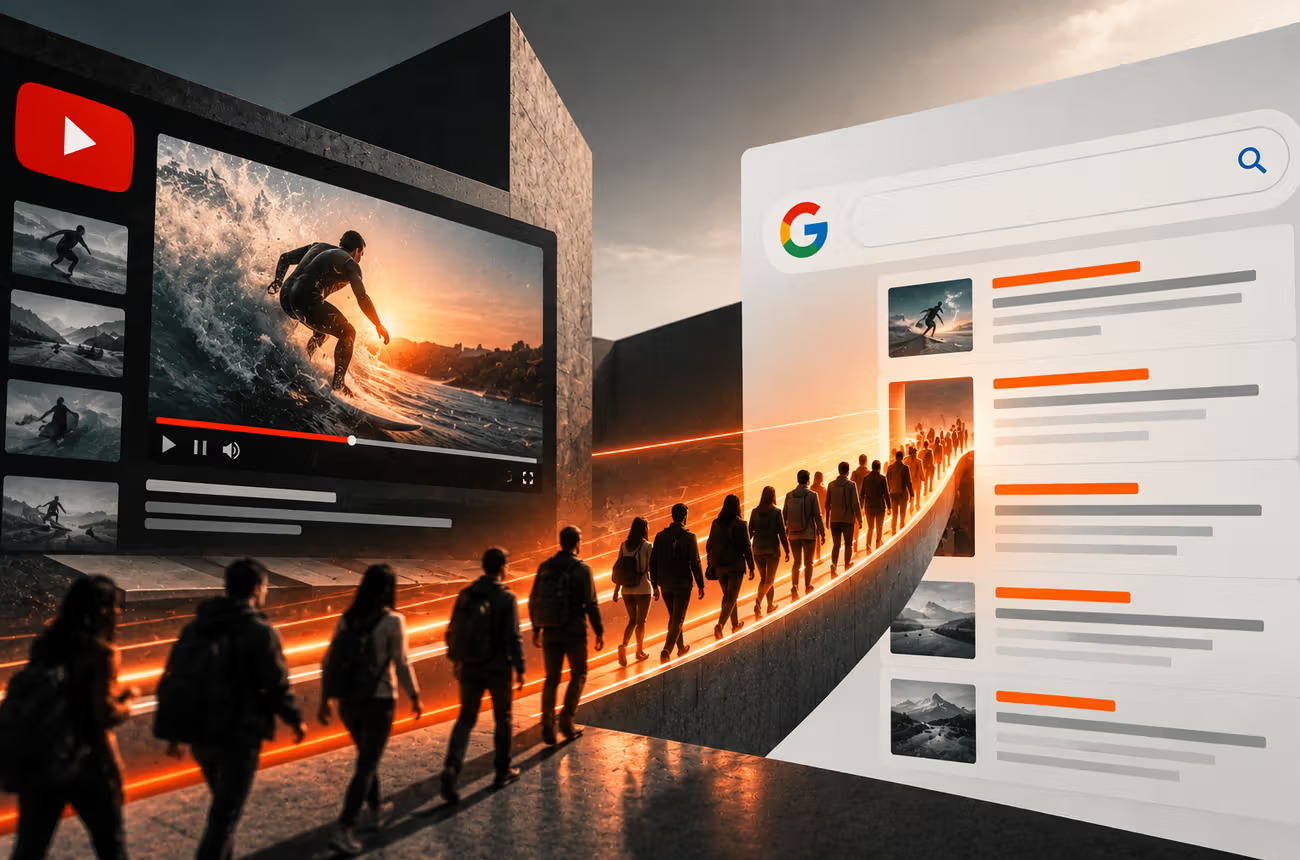
Google has spent two months handing its lift studies to software. On 14 October it released version 26 of the Google Ads API, and with it 15 metrics that report Search Lift: whether people who saw an advertiser’s YouTube, Demand Gen or TV ads went on to search for the brand more often than a matched group who did not.
Until now those results lived on the Lift measurement page inside Google Ads. Version 26 makes them readable by code, so they can sit in the same warehouse, dashboard or reporting tool as paid search, CRM and pipeline data.
That matters because upper-funnel video is the spend B2B marketing teams find hardest to defend. A YouTube campaign rarely produces a click that converts the same week, and boards asking for pipeline proof tend to treat it as discretionary. Search Lift does not prove revenue, but it is a controlled test of whether the ads changed what people typed into Google. Getting that number out of a separate screen and next to the rest of the funnel is the practical change here.
What does Google Ads API v26 add for lift measurement?
Google Ads API v26 adds a read-only resource called SearchLiftKeywordBundle, two reporting segments and 15 Search Lift metrics, according to the release notes. The keyword bundle is the set of search terms a study tracks, such as a brand name or a product category. Results can be split by bundle and by search property, which separates searches on Google from searches on YouTube.
The headline metric is relative_search_lift, the difference in search volume between the exposed and control groups expressed as a share of the control group’s searches. Around it sit 90% confidence bounds, a p-value, the cost and impressions behind each slice, and normalised estimates of incremental searches in total, per impression and per unit of spend. Google’s reporting documentation says the incremental-search figures are reported only when lift is statistically positive, so a study that finds nothing returns less data, not a negative number.
The release is the second half of a sequence. Version 25.1, released on 19 August, added read access to Conversion Lift, with 24 metrics, and to Brand Lift’s survey-based results. Version 26 completes the set with Search Lift, which Google links to campaigns through a new Campaign.lift_measurement_config field.
The API reads results only. Advertisers cannot create a Search Lift study through it; studies are still set up in the Google Ads interface or by Google staff, and the keyword bundles are configured the same way. The Search Engine Roundtable report on the release and PPC Land’s coverage describe the same limits.
Which marketing teams can actually use Search Lift data?
Search Lift is available only to accounts Google has approved. Its developer documentation says the customer ID must be on an allowlist managed by Google’s Global Product Solutions team, and its setup guide says an account without a Google representative cannot use the product at all. A team with API access but no rep relationship will find the new fields return nothing.
The studies also measure a narrower set of campaigns than the name suggests. Google’s budget guidance says Search Lift covers YouTube video, Demand Gen and, where available, TV campaigns. It tests whether those ads drive searches. It does not measure how Search ads affect organic search, a reading the “Search” in the name invites.
The entry price is real. Google sets a minimum of $10,000 over a 28-day study in both the US and the UK, converted into the account’s currency at rates it updates each quarter, and recommends at least 1.5 million impressions across the measured campaigns. Running Search Lift alongside Brand Lift adds no extra cost, because the budgets do not stack. Each study tracks up to five keyword groups.
For a mid-sized B2B SaaS team running modest YouTube or Demand Gen activity, those thresholds will decide whether any of this applies. For teams already spending at that level on video, the API removes a manual step: results that previously had to be exported or screenshotted from Google Ads can be pulled on a schedule and joined to branded search trends and CRM records. Google publishes no benchmark for typical B2B search lift, and the API does not supply one, so each team’s first study is also its baseline.
What else changes in v26, and what breaks?
Google Ads API v26 removes the enhanced_conversions_for_leads_enabled field, which reported whether an account had enhanced conversions for leads switched on. Google has replaced it with two fields, enablement_setting and effective_enablement_setting, which expose a single account-level enhanced conversions configuration. Any reporting tool, script or connector that reads the old field will need updating before it moves to v26. That is the change most likely to reach a marketing team through a broken dashboard rather than a release note.
The rest of the release is narrower. Developers can now create Local Services Performance Max campaigns through the API, supplying a country code and a Google Business Profile listing ID. The EU political advertising declaration becomes optional for campaigns that positively target only locations outside the European Union, which removes a compliance step for UK-only and US-only campaigns. Five hotel-specific bid modifiers have been renamed so they apply across travel verticals, and LINE and SMS have been added as business message providers.
Version 26 is also the first release under a faster schedule. Google announced on 12 October that the Ads API will ship twice a month, while keeping four major versions a year and leaving each available for a year. Sunset dates are unchanged: Google projects v25 will be retired in August 2027 and v26 in November 2027.
Google has not said whether advertisers will be able to create Search Lift studies through the API, or whether access will widen beyond allowlisted accounts.