Google opens its SynthID checker to everyone, and it reads ChatGPT images
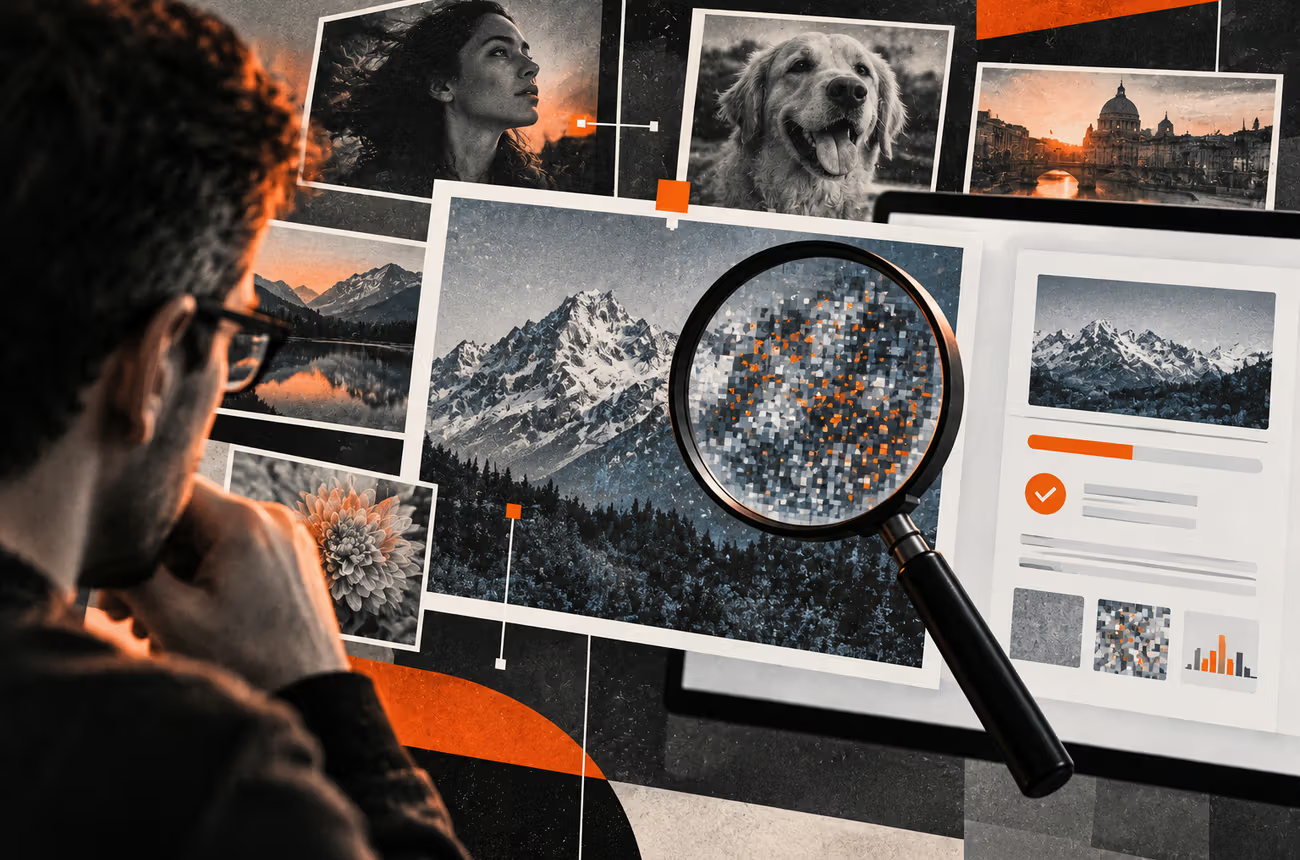
Google’s watermark checker left the newsroom on 7 October. The company first offered SynthID Detector to journalists, media professionals and researchers through a waitlist in May 2025; it has now opened the tool to the public worldwide, in English only, for images, video and audio. It looks for SynthID, an invisible watermark embedded when content is generated, and now recognises marks applied by OpenAI, NVIDIA and Kakao as well as Google’s own.
The wider access matters for marketing teams because images from both Google’s and OpenAI’s generators now feed the same public check. OpenAI says images made in ChatGPT, Codex or its API carry a SynthID watermark alongside C2PA Content Credentials, the metadata standard that tends to fall away when files are converted or screenshotted. Google says it has watermarked more than 180 billion images and videos. A campaign visual made with either company’s tools, then resized and compressed on its way to a landing page, may still carry a mark that a prospect, journalist or competitor can test for. AI visuals are already routine in B2B work: the Content Marketing Institute’s research for 2026, based on 1,015 B2B marketers surveyed in mid-2025, found 53% use or are implementing AI tools to generate and edit images, video and other visual material.
What can Google’s SynthID Detector check, and whose content does it cover?
Google’s SynthID Detector, at synthid.com, checks uploaded image, video and audio files for SynthID watermarks from Google and its named partners. Ars Technica reported that the public site requires sign-in and allows roughly ten checks a day across all three media types. Text is not covered, even though Google applies SynthID to text from its Gemini app. Text watermarks from OpenAI and Anthropic run through separate detectors with restricted access, as The Helm reported on OpenAI’s textGrain.
Partner coverage is narrower than the partner list suggests. OpenAI’s provenance documentation confirms SynthID in images from ChatGPT, Codex and the API, and in audio from ChatGPT and the API, while its video carries C2PA only. NVIDIA’s arrangement, announced with Google in May 2025, covers video generated by its Cosmos world foundation models through a preview service on build.nvidia.com rather than everything NVIDIA’s models produce. Google names Kakao as a partner without saying which of its products are covered.
Apple is listed as coming “soon”. In June Apple revamped Image Playground so that it can produce photorealistic pictures for the first time, and said every generated image would carry a hidden SynthID watermark, according to MacRumors. Google’s 7 October announcement gives no date for when Apple images will register in the detector.
The standalone site is one route among several. Google says verification built into Search, the Gemini app and Chrome already handles more than 1 million requests a day.
What does a SynthID result prove, and what does it miss?
A SynthID result shows only whether a supported watermark was found. Google describes the detector as a check on whether a file was made with AI from Google or its partners, which is a narrower question than whether it was made with AI at all. A negative result does not establish that a file is human-made. The file may come from a generator outside the partnership, from a model released before watermarking began, or from an edit heavy enough to wipe the signal.
Durability is where SynthID parts company with metadata. Google says its image and video marks are designed to withstand cropping, filters, frame-rate changes and lossy compression. C2PA Content Credentials can be lost through everyday actions such as taking a screenshot or converting a file, OpenAI’s documentation states. OpenAI adds that heavy cropping, compression, added noise or screenshots may make SynthID harder to detect, so a publishing pipeline that strips metadata may weaken the watermark without reliably removing it.
Positive results are also less precise than they look. The version Google introduced for media professionals in May 2025 highlighted the areas of an image most likely to carry a watermark. Ars Technica reported that the public site gives a simpler indication of whether a supported mark is present, without that region-level detail. A product photograph with an AI-generated background and a fully synthetic scene could both come back as watermarked, with nothing in the result to separate them.
What does this change for marketing teams using AI visuals?
For marketing teams, the origin of a partner-made AI visual can now be checked by people outside the company, while the rules on when it must be disclosed are unchanged. The IAB’s AI Transparency and Disclosure Framework, revised to version 2 on 18 August, calls for targeted disclosure rather than universal labelling. It treats prompt-generated images and video as higher-risk uses that need a label, offers a standard icon or a clear text label for US advertising, and exempts routine post-production and ad copy. In the EU, the AI Act’s transparency rules have applied since 2 August, and the Commission’s guidance requires synthetic images and video resembling real people, places, objects or events to be labelled whatever their commercial purpose.
Opening the detector to the public leaves those tests where they were. What it shifts is how easily an undisclosed AI image can be identified after publication. A team that makes a hero illustration in ChatGPT and labels it under its own policy is in the same position as before. A team that publishes a photorealistic customer scene or event photograph from a partner tool without disclosure now faces a check that anyone with a Google account can run in seconds.
The detector cannot settle questions of origin on its own. Agencies and freelancers often switch between generators, some marked with SynthID, some with C2PA only and some with neither, and a clean scan of a delivered asset says nothing about how it was made. The IAB’s January framework paired consumer-facing labels with machine-readable C2PA metadata held by the advertiser, a record of tool and process that a watermark check cannot supply.
Google has not said when the detector will support languages other than English, or when images from Apple’s Image Playground will register.