Google gives its Gemini agent a work account, putting AI on the org chart
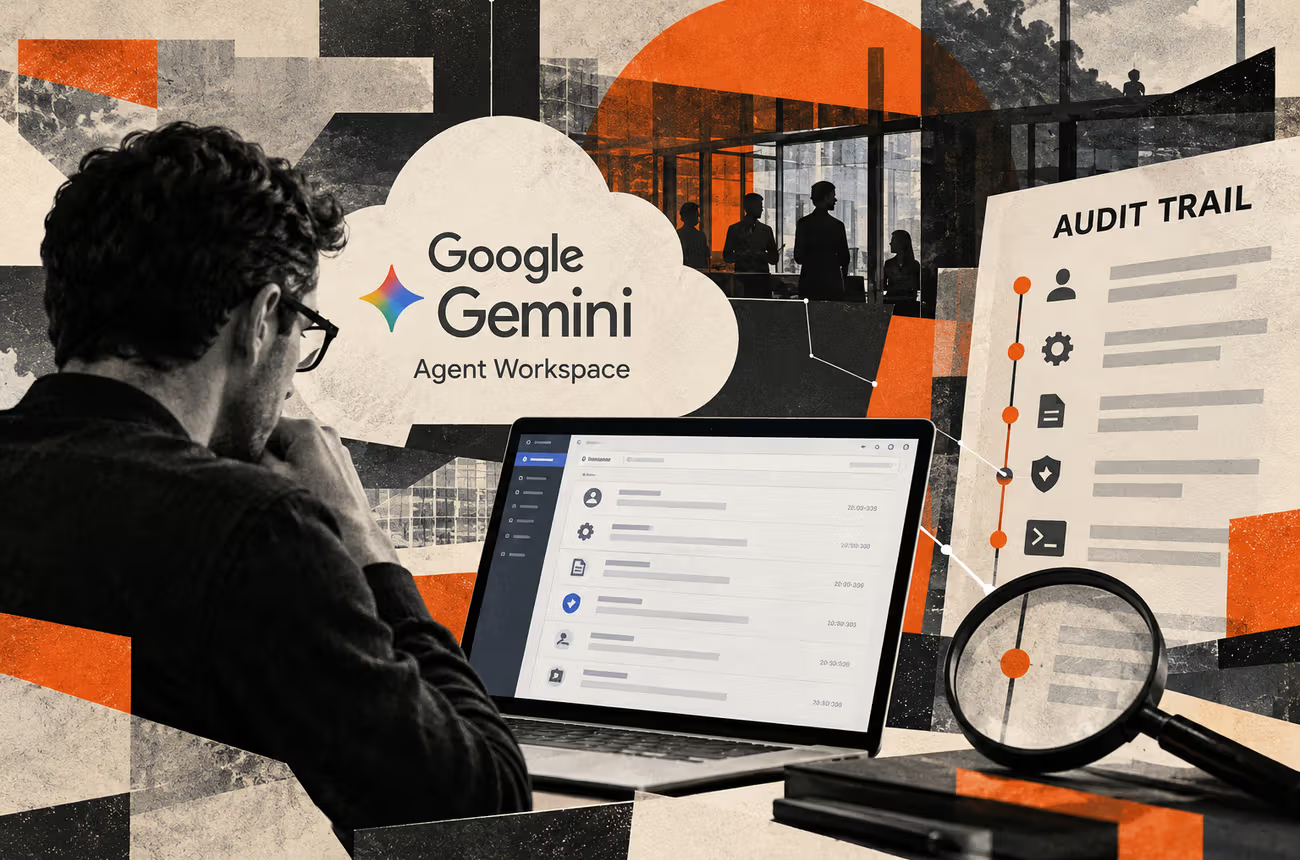
Google’s answer to the workplace agent arrived with an email address. At its Gemini at Work 2026 conference in Mountain View on 8 October, Google Cloud introduced the Gemini agent, a single agent that plans and finishes work across company systems, and gave its persistent form a Workspace account of its own, with an inbox, a calendar, Drive storage and a listing in the company directory.
The identity is what sets Google apart in a crowded autumn. OpenAI, Microsoft and Meta have all shipped agents that run work on a user’s behalf, and accountability has been the recurring question: when an agent edits a file or sends a message, whose name sits against it. Google’s answer is the agent’s own. For marketing teams, whose work runs through shared documents, approval chains and tools such as Slack, Jira and Salesforce, that turns a productivity launch into a governance decision about access and sign-off.
What does Google’s Gemini agent actually do?
Google’s Gemini agent is a single agent for work that accepts a goal, plans the steps, calls the tools it needs and returns finished work, according to Google Cloud’s launch post, which was adapted from chief executive Thomas Kurian’s keynote. “You give it objectives, not instructions,” the post says. Google describes it answering questions, handling knowledge work, creating images and media, and writing and running code from one prompt box.
For larger jobs the agent creates temporary sub-agents, each with its own identity, and coordinates them across parallel and sequential steps that Google says can run for hours or days. The work runs in the cloud, so it continues after a user closes the laptop. A tasks inbox shows the agent’s reasoning, the sub-agents it has delegated to and the skills it has loaded, TechCrunch reported.
The integration list is long and deliberately cross-vendor. Google names Workspace, Microsoft 365, Slack, Jira, Confluence, Git, Salesforce, ServiceNow, BigQuery, Databricks, Postgres and Snowflake, plus any Model Context Protocol (MCP) server inside or outside a company network. The agent can be reached from the web, iOS, Android, Windows and Mac desktops, the command line, Workspace, Microsoft 365 and Slack. It routes each job to a model, choosing from Google’s Gemini family and, from launch, Anthropic’s Claude models, with other private and open models promised later.
How does a work account change accountability for marketing teams?
Google calls the persistent version a coworker agent. A team creates one by describing a role, and it receives a Workspace account with an email address, calendar, Drive and a place in the company directory. Colleagues can add it to Chat spaces, @mention it, or tag it in a document comment, and its edits appear under its own name in a file’s version history. Google says it sees only the context that team members share with it.
Every action the agent takes is written to an audit trail attributed to the agent rather than a person. Google pairs that with a stack of controls: a cryptographically attested identity with least-privilege permissions set by security administrators, an Agent Sandbox with its own network boundary, and an Agent Gateway that Google describes as an AI network firewall. Policies are written once at the gateway and applied to every agent; Google’s example bars agents from opening documents classified “Need to Know”. Administrators can also set a hard spending cap per project in the Cloud Billing Console, at which point the agent pauses until someone resumes it.
For a marketing team, the practical effect lands on the review chain. A campaign brief, a product page or a partner deck edited by a coworker agent carries the agent’s name in its history, which makes contributions traceable but leaves open who approved the agent’s access to the brand guidelines or the CRM in the first place. Google’s launch material does not describe a mandatory human sign-off on each task, a contrast with OpenAI’s Dots, which gates actions behind approval checks.
Analysts welcomed the controls and flagged where the dependency sits. “CIOs should go in with their eyes open,” Nick Patience, practice lead for AI platforms at The Futurum Group, told CIO Dive, noting that while model choice is open, the memory, context and skills an agent accumulates live in Google’s layer. That matters to any team weighing how much institutional knowledge to build up inside one vendor’s agent.
What is still unclear about access, cost and customers?
Google has not published a general-availability date for the Gemini agent. A company email to CIO Dive described a preview for a select set of customers, with wider availability to follow. Industry versions for financial services and legal are in preview, and versions for government, healthcare and retail are listed as coming soon. Google says it is starting with businesses and will bring the agent to consumers later, without a date, TechCrunch reported.
On price, Google’s launch post names cost controls but no figure. A Google spokesperson told VentureBeat the agent comes at no additional charge for customers where Gemini Enterprise is available, Reworked reported. That places it against Microsoft’s Copilot Autopilot, which bills by the task, and leaves the real cost tied to model usage, the spending Google’s per-project caps are built to limit.
The customer picture needs care. TechCrunch reported that early testers included the sportswear brand On, Shopify and PayPal. Google’s own post cites Shopify and PayPal only as examples of companies running multi-model AI, with PayPal routing 10 million multi-model requests a week, and does not describe either as a tester of the new agent. Neither company has published its own account of using it.
Joe Mariano, a senior director analyst at Gartner, told CIO Dive that Google now positions the agent across both Workspace and Gemini Enterprise, and questioned whether Google has yet made clear where one product ends and the other begins. For marketing operations leads deciding which licence covers which team, that boundary decides who owns the rollout.
Google has said the Gemini agent will be built into Gemini Enterprise, but has not said when the preview ends or which Workspace plans will include coworker agents.