Slack opens code channels to rival AI agents and names marketing next
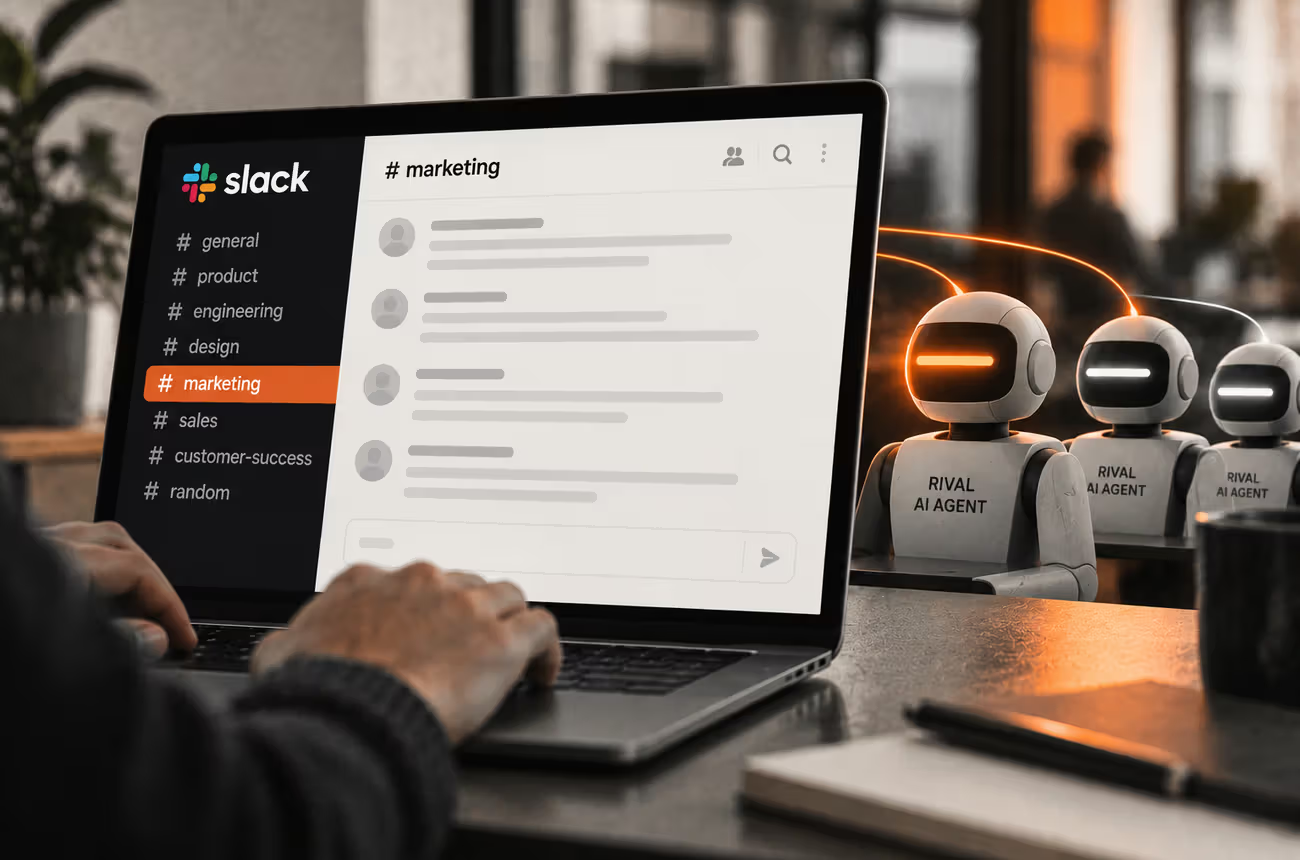
Slack’s answer to AI work that nobody else can see arrived on 20 August, and it took the form of a channel. Slack Code gives coding agents a dedicated project space that any colleague can watch or interrupt, and that archives itself into a searchable record once the job is done.
The format reaches past engineering. Slack has said the same structure will carry work that involves no code at all, naming marketing campaigns first among the functions it expects to follow. Salesforce has said the underlying APIs will open to custom agents built outside its partner list. Marketing teams already run briefs, approvals and campaign chatter in Slack channels. The controls being proven on pull requests are the ones that will arrive alongside their own agents.
What does a Slack code channel actually do?
Slack Code creates a project-specific channel the moment someone mentions a supported agent in an ordinary conversation. The agent then builds the space around the task, surfacing code diffs, a running plan and live previews in dedicated tabs instead of burying them in a thread. When the work lands, the channel archives itself and stays searchable, which Slack describes as an audit log.
The problem Slack says it set out to fix will be familiar to anyone who has watched a colleague disappear into a browser tab with an assistant. Work done between one person and one agent stays invisible until it is finished, at which point the assumptions built into it are expensive to unpick. Slack’s argument is that visibility catches a wrong assumption while correcting it still costs nothing.
The control layer carries most of the weight. Anyone in the channel can pause, redirect or stop an agent mid-task. Slack requires human sign-off before an agent pushes changes to production. The guardrail has a documented reason: coding agents have deleted live codebases during sessions, and the sign-off step puts a person between the agent and anything irreversible. Agents inherit the workspace’s existing permissions and admin controls, so IT provisions no separate identities and configures nothing new.
Slack built the format for its own engineers first, and says more than 70% of its code channels open and close inside a single day, from idea to merged pull request. That is the company’s own internal figure, published without a sample size or a before-and-after baseline. It also counts throughput, not the quality of what shipped.
Who can use it, and on which plan?
Slack Code is available on every Slack plan from launch, but the agents that fill the channels are bought separately. That split decides who can actually run one.
Anthropic’s Claude Tag, which can open a code channel and archive it once the work lands, is in beta on Claude Team and Enterprise plans only. Anthropic’s documentation states it is not available on Free, Pro or Max. Claude Tag replaced the older Claude in Slack app on 3 August 2026. That app had worked on Pro and Max, so individuals and smaller teams on those tiers lost the Slack integration instead of gaining a better one.
Claude Tag launched on 23 June as a shared agent that anyone in a channel can tag, and that keeps context across the conversations it sits in. Cat Wu, head of Claude product at Anthropic, framed the Slack Code launch as a continuation of that, saying engineering work already starts as a Slack conversation with Claude Tag. GitHub put the division of labour more plainly: its chief product officer, Mario Rodriguez, described a model in which humans set direction and agents close the loop.
Anthropic’s Claude Code and Claude Tag, Cognition’s Devin, GitHub Copilot and Vercel’s agent made up the launch line-up on 20 August. OpenAI’s ChatGPT, listed as coming soon at the time, now appears on Slack’s own page among the agents a user can mention. For a marketing team, that turns a capability question into a procurement one. The channel is free, the agent sitting in it is not, and the tier its vendor puts it behind sets who in the business can use it.
When does the format reach marketing work?
Slack has attached no date to the expansion. The company said the model will extend beyond code into marketing campaigns, legal contract reviews and IT onboarding, and that the code channel APIs will open to the wider developer community so custom agents can join. Sateja Parulekar, vice-president of product marketing at Slack, put marketing near the front of that queue, calling “building marketing campaigns with coding agents inside of code channels” the use case closest to her own work, and naming Figma files, web content and video alongside it.
That expansion remains a stated plan rather than a shipped feature. What did ship alongside Slack Code is the connective tissue. A new Agents tab lists every agent and session across the workspace, so a manager can see what is running, revisit a session or stop one that has wandered off. Direct messages with agents work like messaging a colleague. An “Add to Slack” flow installs agents built on platforms including Lovable, n8n and LangChain in a few clicks, which is the route a marketing operations team is most likely to reach for first.
The partner list carries a commercial oddity. Slack is owned by Salesforce, whose Agentforce line sells marketing agents of its own, and OpenAI’s ChatGPT sits on the founding partner list for Salesforce’s flagship collaboration product. Salesforce has answered that overlap by adding more outside agents, not fewer, which points to marketing teams choosing between agents inside Slack rather than being handed one.
Slack Code and its code channels are available on all Slack plans today. The agents that fill them are not.