Microsoft Clarity adds free AI citation analysis rivals sell as paid
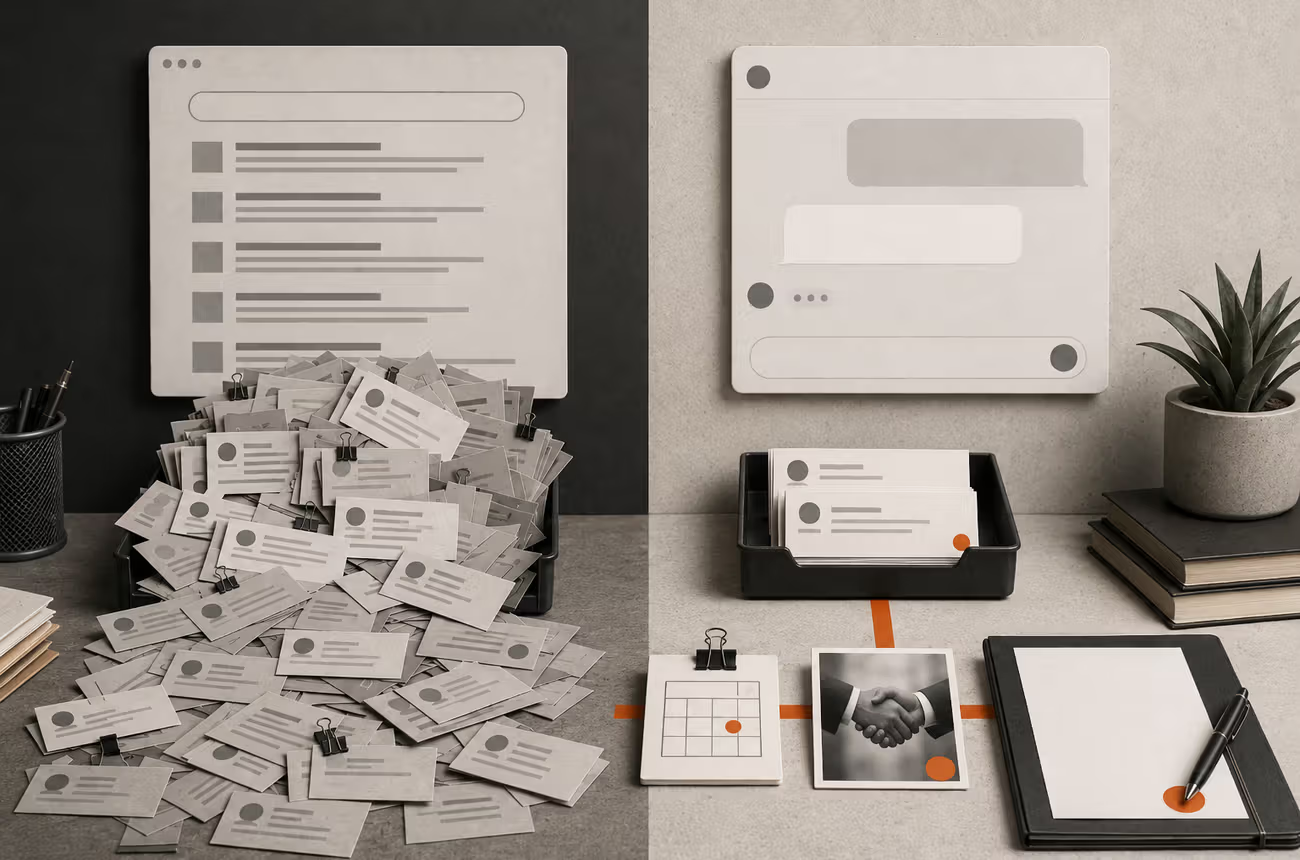
Microsoft’s year-long effort to measure how AI answers use web content reached its most competitive stage on 9 July, when Clarity added a free feature that tells brands not only whether an AI-generated answer cites them, but how much of that answer their content actually supports — and which rivals are taking the citations they are missing.
The feature, Topic Insights, extends Clarity’s Citations product, which reached general availability on 13 May. It arrives against a measurement problem conventional analytics cannot see. A page can shape an AI-generated answer without ever producing the click, visit or session a dashboard would count, so the moment a brand’s content influences a buyer may not register at all. Microsoft says traffic that does arrive from AI systems converts at roughly three times the rate of other channels, a figure consistent with Clarity research from December that drew on more than 1,200 publisher sites. The tools built to track that picture competitively have, for the most part, sat behind paid tiers.
What Topic Insights actually measures
Topic Insights groups the questions people ask AI systems into themes a brand defines, then reports four things for each theme. Visibility shows how often a domain is cited and its share of authority against every other domain in the same set of queries. Influence measures how much of a given answer a brand’s content actually supports, separating a passing mention from a substantive contribution. Competition names which domains are cited alongside a brand and where they are outperforming it. Opportunities turns the first three into a prioritised list: gaps to fill, authority signals to strengthen, existing pages to rework.
Microsoft illustrates the feature with a running-shoe brand that assumes its AI visibility comes from branded searches and product pages, only to find competitors winning citations for durability, replacement timing and injury prevention. The useful output, in that example, is a durability guide rather than another product page. Because topics, prompts and competitor sets are all user-defined, the quality of the analysis depends heavily on how carefully a team chooses representative prompts before Clarity measures anything.
What it costs, and what the beta does not promise
Topic Insights is free to every Clarity user, which is the crux of the story. Microsoft frames it explicitly against “AI visibility solutions that reserve these types of insights for paid tiers”, and the trade press has named names: according to PPC Land, tools from Adobe, Amplitude and various standalone generative-engine-optimisation start-ups have positioned comparable citation and competitor analysis as premium, paid functionality. No independent head-to-head comparison of those products’ outputs has been published, so the claim is one of category and pricing posture rather than proven feature parity.
The access requirements and the limits both matter, and Microsoft is unusually candid about them. Topic Insights only works once Citations is enabled, which means creating a Clarity project and verifying domain ownership through Bing Webmaster Tools or Google Search Console. Its disclaimer states that the beta runs on GPT-5.3 and Microsoft’s own WebIQ grounding layer, caps usage at ten reports per project per week, and is available only for eligible website categories. Microsoft describes the output as suitable for directional monitoring rather than guaranteed accuracy, and says recommendations should be reviewed before any decision rests on them. The distinction is worth holding: Citations is generally available; Topic Insights is a beta, and the company is not presenting its advice as final.
What independent research says actually earns citations
The more useful question for a marketing manager is whether the “opportunities” Topic Insights surfaces point where the wider evidence already points. They may. A May 2026 NP Digital survey of 500 marketers found original research earned AI citations 82% of the time — the highest of eleven content types tested — while generic blog posts scored 25%, product pages 14% and video just 2%. The survey’s authors attributed the pattern to a simple mechanism: AI systems can reproduce generic explanatory content from their own training data without citing anyone, but they cannot fabricate original data. If that holds, the gaps worth filling skew towards material a model cannot invent, which is close to what a content-gap tool should be steering teams to build.
Two cautions temper any single reading. Semrush research found AI citation sets change by roughly 50% month to month, with only 11% overlap between platforms, so a competitive snapshot captured within one week’s ten-report allowance can look materially different weeks later, independent of anything a team publishes. And because Topic Insights measures only within the AI systems Clarity’s grounding infrastructure covers, a brand that relies on it alone risks missing citation activity happening elsewhere. Rival approaches exist — Ahrefs added a found-versus-cited distinction to its Brand Radar product in April — and no single tool yet captures a complete view of where a brand stands in AI answers.
Microsoft first flagged the content recommendations behind Topic Insights on 17 June and shipped them just over three weeks later. Whether the beta’s advice converges with the independent citation research, or diverges from it, is the test the tool now has to pass.