LinkedIn ties AI literacy to a 78% hiring lift but publishes no method
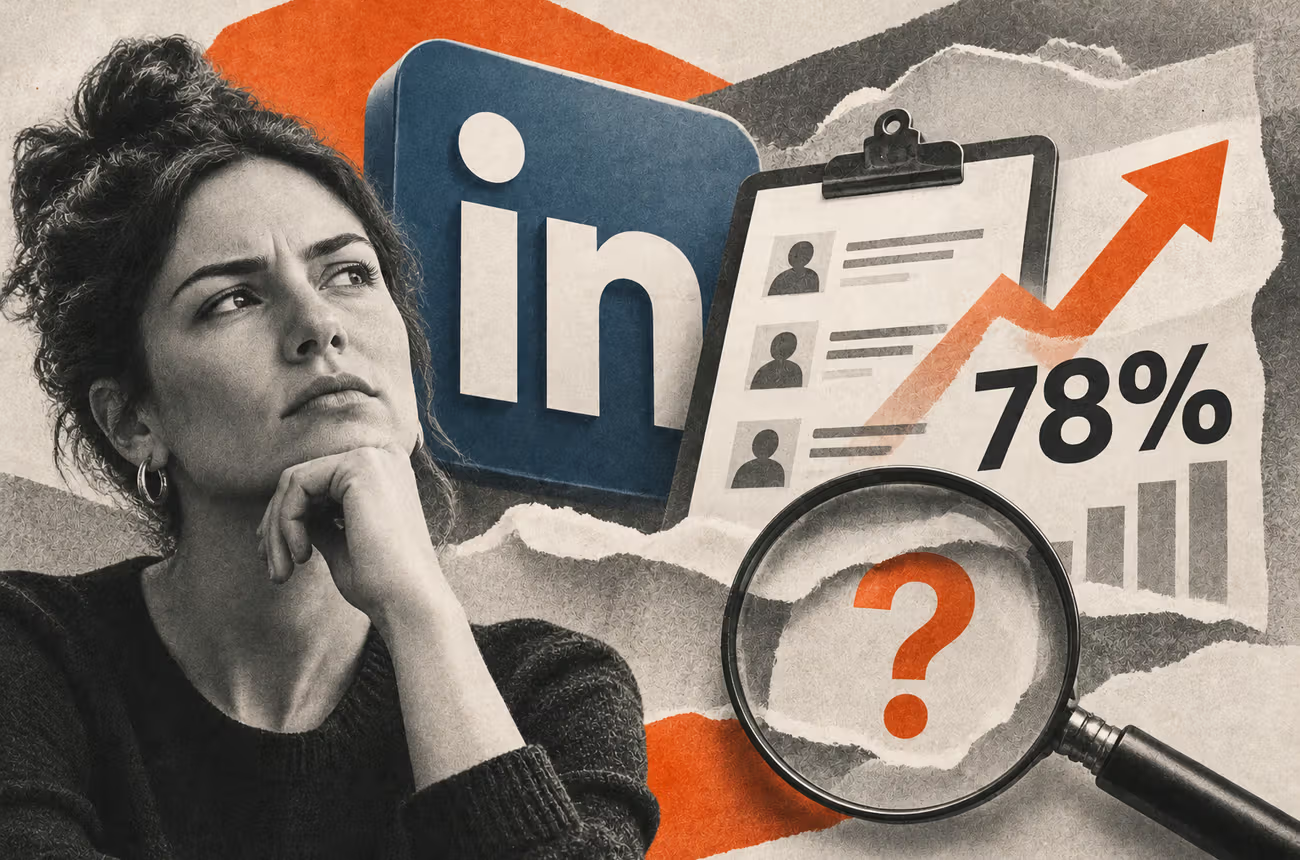
LinkedIn put a number on the career value of AI literacy on 27 October and left out how it got there. Members who list AI literacy skills are 78% more likely to get hired and 11% more likely to receive a promotion than members who do not, according to network data the company published as it renamed its Economic Graph research site LinkedIn Pulse.
The figures land on a profession LinkedIn names directly. The release names marketing among the non-technical roles where employers increasingly seek AI literacy, alongside design, project management, administration and writing. In June, LinkedIn put growth in marketing job postings requiring AI literacy at 113% year on year. The October release says only 1.2% of members list an AI skill at all, yet it carries no methodology section and no footnotes for the comparisons behind its headline. For marketing managers deciding what to learn, who to hire and what to put on a profile, the demand signal is clearer than the promised payoff.
What did LinkedIn Pulse report about AI literacy and hiring?
LinkedIn Pulse is the renamed LinkedIn Economic Graph site, and the company says it draws on data from 1.4 billion members, 71 million companies and 42,000 skills. Its launch release, credited to LinkedIn Corporate Communications rather than a named economist, carries the 78% hiring and 11% promotion figures. It also estimates that AI “has helped create roughly 2 million new jobs”, and says US workers with AI skills move into occupations paying an average of $28,000 more than those entered by workers without them. That last figure compares occupations, not individual pay.
The release tracks where hiring is moving. Between July and September 2026, founder ranked among the ten fastest-growing roles in the US, the UK, Germany, France and India, and AI Engineer ranked among the ten fastest-growing occupations in seven economies, the UK included. Entry-level hiring for AI Engineers rose 68% year on year in the US and 55% in India, though LinkedIn gives no absolute counts. Access remains uneven: women account for about a quarter of new AI hires, and more than 90% of AI roles in 2025 went to workers with at least a bachelor’s degree.
Pulse is a new label more than a new dataset. Social Media Today, which covered the launch the same day, described it as a relaunch of the Economic Graph’s insights hub and noted that LinkedIn once used the Pulse name for its long-form publishing tool. Jessica Jensen, LinkedIn’s chief marketing officer, pitched the site to companies, policymakers, governments and journalists trying to see where work is heading. LinkedIn is also working with outside journalists, including Kaya Yurieff, founder of the newsletter Scalable, on analysis of AI’s effect on jobs.
How much of LinkedIn’s AI skills data applies to marketing roles?
LinkedIn’s October release names marketing but breaks none of its figures down by function or industry, so the 78% and 11% comparisons cannot be read as marketing-specific. The most direct marketing numbers date from June, when LinkedIn and Adobe launched a global AI skills initiative for marketers at Cannes Lions. In a piece co-written with Adobe’s Rachel Thornton, Jensen cited Economic Graph data showing a 113% rise in marketing postings requiring AI literacy, and said only 4% of marketers worldwide had added AI skills to their profiles, against 12% in both product management and engineering.
The June and October figures are not directly comparable. They were published four months apart, and LinkedIn does not say whether “AI skills” means the same thing in each, so the difference between 4% and 1.2% says nothing reliable about marketers relative to the wider membership. The two releases agree on direction: demand for AI literacy in marketing roles is growing faster than the share of marketers who show it on their profiles.
Independent data points the same way without matching LinkedIn’s measure. Indeed Hiring Lab reported in January that the share of US marketing job postings mentioning AI rose from 8.4% at the start of 2025 to 14.9% by December. Indeed counts its own AI-related keywords in US adverts, so it supports the trend rather than LinkedIn’s percentages.
The practical tie-in from June is training. LinkedIn Learning released four role-based courses, covering digital marketing, content and creative, social and communications, and data and analytics, free for the first 12 months and available in 47 languages. Completers receive certificates they can display on their profiles, which is the visible signal the October data rewards.
What does LinkedIn’s AI literacy data not show?
LinkedIn’s release does not show that adding AI skills to a profile causes a hire or a promotion. The 78% and 11% figures are associations, and LinkedIn does not state the period measured, the baseline the comparison runs against, or whether it controls for occupation, seniority, industry or country. Members who list AI literacy may differ from those who don’t in ways that drive hiring on their own, such as working in technical roles or in markets where demand is stronger.
The release is also inconsistent on its job-posting growth. Its key-insights summary says postings requiring AI literacy jumped roughly 65% in the last 12 months. The body says they jumped roughly 65% in each of the past two years and now run at more than ten times the 2023 rate. PPC Land, which flagged both wordings on 28 October, pointed out that the release uses “AI literacy skills”, “AI skills” and “an AI skill” without saying whether they mean the same thing. The 2 million jobs estimate comes with no time period, geography or method.
LinkedIn does qualify one finding. Founders who launched start-ups in 2024 employed 26% fewer people after their first year than those who launched in 2021, and the release states that its data does not establish that technology caused the smaller teams. It attaches no comparable caveat to the hiring and promotion figures that lead the announcement.
LinkedIn’s marketing statistics have needed tracing before. In October, The Marketing Helm found that figures in a LinkedIn Marketing Blog post on AI citations were uneven once checked against their sources, with only one carrying a source line.
The only methodology note on the Pulse site says its hiring data is updated monthly.