ChatGPT kept only 41% of its sources on a same-day rerun, Muck Rack finds
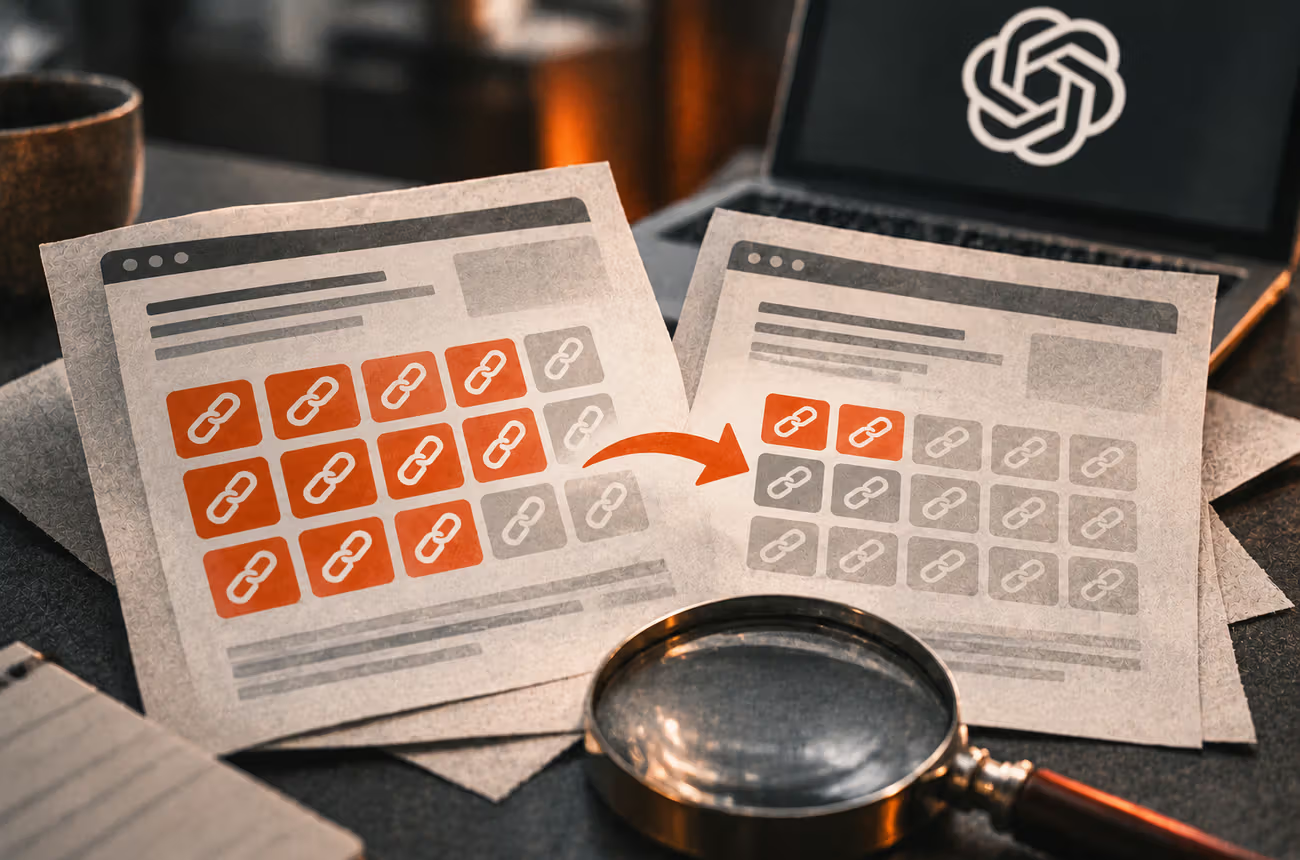
Ask ChatGPT the same question twice in one day and most of the websites it cites will change. When Muck Rack’s researchers ran identical prompts twice in September, ChatGPT repeated 41% of the domains it had cited the first time and Gemini repeated 45%. Perplexity repeated 94%.
The figures come from the October 2026 edition of What Is AI Reading?, published on 28 October by Muck Rack and its Generative Pulse team. They matter to any B2B marketing team asked to report on generative engine optimisation (GEO), because they put a number on the weakness of the cheapest method available: typing a few buyer questions into an assistant and screenshotting the result. If more than half of ChatGPT’s sources can turn over between two identical requests, one check says little about where a brand actually stands.
What did Muck Rack’s October report measure?
Muck Rack’s fourth What Is AI Reading? report draws on two datasets. The first is Generative Pulse monitoring data covering more than 40 million AI responses and 207 million citations between January and September 2026. The second is a fresh set of 1,020 unbranded consumer prompts, run in September across ChatGPT, Claude, Gemini and Perplexity, with examples ranging from meal-kit subscriptions to travel rewards cards, according to the report’s landing page.
The headline finding has held across all four editions. More than 84% of AI citations came from earned and third-party sources, a category Muck Rack defines broadly to include journalism, government and NGO sites, academic research, encyclopedic sources and third-party corporate content. Paid and advertorial content accounted for 0.3%, unchanged since May. Owned media rose from 13.7% to 15.2%.
The mix inside that third-party share moved. Journalism fell from 27% of citations in May to 22% in September, which the company calls the largest significant shift in the study’s history. ChatGPT drove most of it: journalism made up 28.1% of its citations in January and 22% by September, and several major publishers dropped to near zero in ChatGPT answers while still allowing OpenAI’s search crawler, the press release states. Claude’s journalism share moved from roughly 28% to 24%, and Gemini’s from 27.6% to 23.6%.
The four assistants also drew on largely separate pools. Only 212 domains were cited by all four in the September analysis. Greg Galant, Muck Rack’s co-founder and chief executive, argued that communicators remain best placed to lead GEO because “the work of earning credibility with third parties is exactly what AI rewards”.
Why does one AI answer mislead marketing teams?
Muck Rack’s repeat test shows how far a single AI answer can drift from the next one. The report calls ad hoc testing unreliable for that reason, and recommends tracking a consistent set of relevant prompts over time, separating brand mentions from citations, recording which sources shape each answer, and comparing results across all four assistants.
That last step matters because the platforms differ in what they reward. Axios, reporting on the same data, said ChatGPT drew 34.6% of its citations from government and nonprofit sources, Gemini leaned most on company-owned content at 34.4%, Perplexity cited journalism most often at 27.8%, and Claude favoured third-party corporate content at 23.5%. A brand that looks strong in Gemini on the back of its own product pages may barely register in ChatGPT.
The type of question changes the answer too. According to Axios, practical guides accounted for 68% of citations on how-to questions, buyers’ guides and reviews were cited in 45% of answers to best-of queries, and expert analysis led industry-trend questions at 41%. For a B2B SaaS team, those categories map loosely onto implementation questions, shortlist questions and category questions, which suggests an audit built only on “best tool for X” prompts will miss the questions buyers ask before and after the shortlist.
The gap between being named and being linked adds a further layer. The Marketing Helm has reported that Semrush found AI tools name brands far more often than they cite them, so a single visibility score can hide two different problems. Muck Rack’s data makes the same case from a different direction: the measurement has to specify which platform, which question type, which signal and how many runs.
How far do the findings stretch for B2B marketers?
The prompts behind the repeat test were consumer questions rather than B2B buying queries, and the public material does not show how the September prompts were chosen or how sources were coded. Those details sit in the full report, which Generative Pulse distributes behind a registration form. Muck Rack also notes that citation behaviour can shift as models are updated or retrained, so some movement between editions may reflect model changes rather than publisher behaviour.
The prompt mix probably affects the owned-media figure most. HeardOf, which sells its own AI visibility audits, ran 20 B2B buyer prompts through ChatGPT on 4 September and found 44.5% of citations went to vendors’ own sites, against the 13.7% owned-media share in Muck Rack’s May edition. That is a single small run by a company with its own product to sell, but it points the same way as Muck Rack’s own observation that product pages and practical guides are frequently cited for product and how-to questions.
Muck Rack has a commercial stake as well. Generative Pulse opened early access to a standalone AI visibility platform on 26 October, two days before the report, and the study’s recommendations describe the kind of tracking that product sells. None of that undermines the repeat-test result, which any marketing team can reproduce with a spreadsheet and a fixed prompt list. It does mean the earned-media framing deserves the same scrutiny as any vendor research, including Ahrefs’ finding that ChatGPT favours primary sources over the sites that summarise them.
Galant said Muck Rack wants more journalism in AI answers, not less, and will track its share in every edition.