Google puts AI visibility reporting inside Search Console, UK sites first
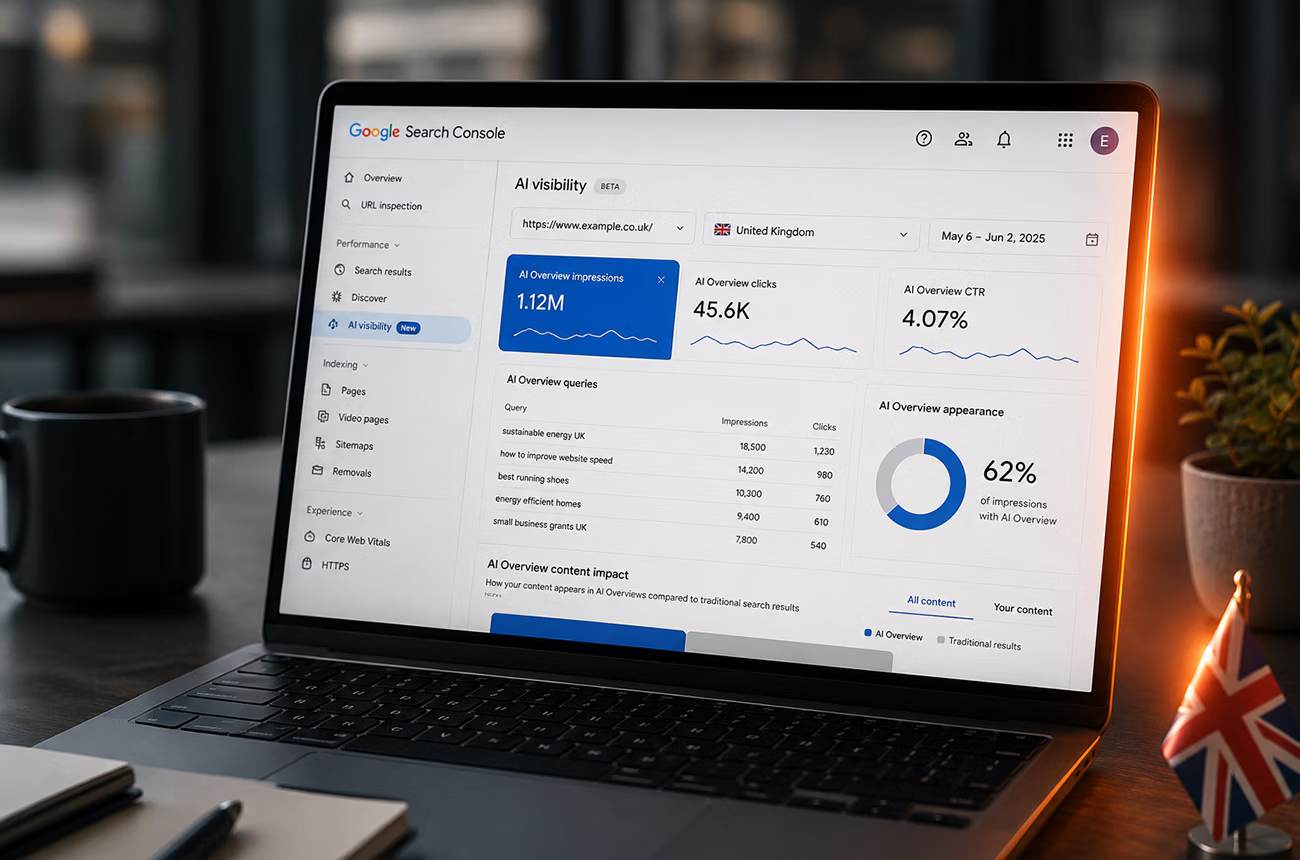
Google has answered the question SEO teams have been asking for two years: am I even in there? On 3 June the company switched on dedicated Search Console reports showing how often a site’s pages appear inside AI Overviews, AI Mode and the generative features of Discover, rolling out first to a subset of UK websites before a global release.
The placement is the message. By putting AI visibility inside the tool every SEO team already uses, rather than launching a separate product, Google is reinforcing its position that appearing in AI answers is part of search optimisation, not a new discipline. For UK marketing teams the timing carries a second signal: the country-first rollout tracks pressure from the Competition and Markets Authority, which has pushed Google to give publishers more control over how their content feeds AI features.
What the new reports show, and what they leave out
Google’s reports track impressions — how often a site’s URLs appeared in generative AI features across Search and Discover — broken down by page, country, device and date, with granularity down to the hour. The data was always counted inside the overall Search Console totals; what changed is that it can now be isolated, so a site can see for the first time how much of its visibility depends on Google’s AI surfaces. The page-level breakdown is the most useful cut, showing which specific URLs Google’s systems consider worth pulling into answers.
What the reports do not show is clicks. There is no click-through rate, no query data and no position information, and Google has said only that more metrics will come over time. The three surfaces are also blended into a single view, so a site cannot tell whether its impressions come from an Overview atop a normal results page or from a full AI Mode conversation, which behave very differently. Microsoft moved earlier and further here: Bing Webmaster Tools has offered an AI performance dashboard globally since February, while Google’s remains a limited UK test.
One counting quirk deserves attention before the numbers travel far. If the same URL appears in both an AI Overview and the ordinary blue links on a single results page, Search Console records one impression, not two, and Google’s John Mueller has confirmed that every link inside an AI Overview shares a single position value — making it impossible to tell which placements within an answer actually perform. The reports confirm presence; they do not yet explain it.
Why Google shipped an opt-out toggle alongside it
Google paired the reports with a control it had long resisted: a toggle letting site owners exclude their content from AI Overviews, AI Mode and Discover’s AI features entirely. Sites that opt out forfeit all traffic and impressions from those surfaces, but Google says the choice will not be used as a ranking signal in ordinary web results. That severs, at least on Google’s account, the link that has worried publishers most — that withdrawing from AI answers would mean disappearing from search.
The CMA’s hand is visible in both features. The regulator has required Google to let publishers opt out of AI uses of their content without losing search ranking, and the UK-first rollout follows directly from that undertaking. For most B2B sites the toggle is a control worth having rather than using: opting out removes a growing visibility surface while competitors continue building citation presence inside it, for no gain in ordinary rankings.
How marketing teams should read the numbers
Marketing teams that gain access should treat the report as a baseline, not a scoreboard. An impression inside an AI answer is a visibility metric, not a traffic one, and a rising count says nothing yet about clicks, leads or revenue. The sensible first move is to record current AI impressions, identify pages that rank well in classic search but never surface in AI features, and examine what separates the two — typically content structure, schema accuracy and how clearly the page identifies its entities and answers its question.
The report also covers only Google’s own surfaces. ChatGPT, Claude, Perplexity and other assistants that increasingly shape B2B research sit entirely outside it, so Search Console data needs pairing with cross-engine monitoring, referral analysis and branded-search trends before it can say anything about a brand’s overall AI visibility. Impressions inside a Google AI answer are exposure, not influence — a distinction worth holding before the numbers reach a board slide. The nearest thing to a click-side companion is GA4’s reporting of AI-assistant referral traffic, which can be set against the impression trend to give at least a directional read on whether AI visibility is producing visits.
Google has not given a date for the global rollout, saying only that the reports will expand after feedback from the UK test group. Click data, the number that would settle what those impressions are actually worth, has no timeline at all.