Google's AI Mode data: searches are 3x longer and content hasn't caught up
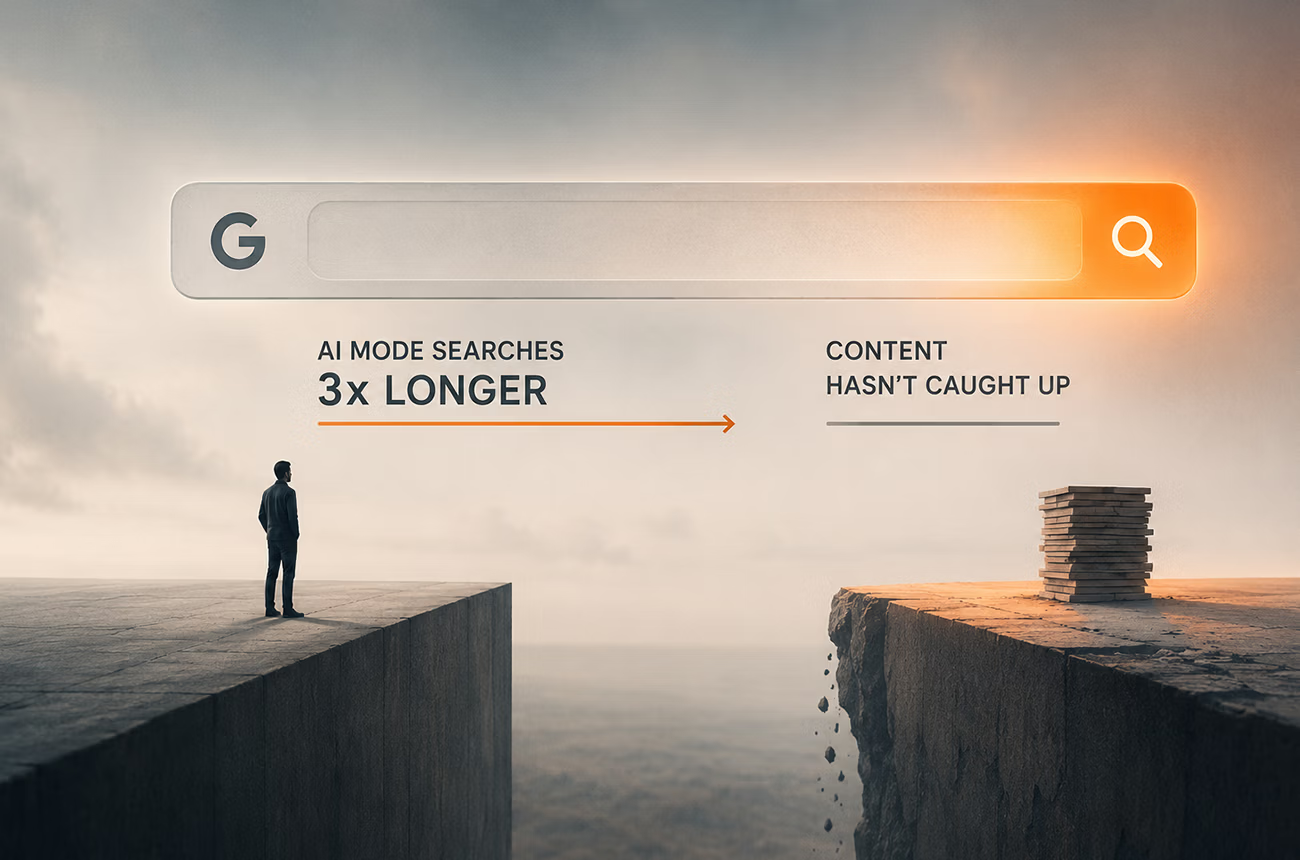
Google’s first year of AI Mode data describes a searcher most content strategies were not built for. In figures published on the company’s blog on 19 May, covering US usage from AI Mode’s May 2025 launch through April 2026, the average AI Mode search runs three times longer than a traditional query, follow-up questions have grown by more than 40% a month on average, and more than one in six searches now arrives as voice, image or video rather than text.
The gap that matters sits between those behaviours and the content built to meet them. Most SEO programmes still target brief keyword phrases and isolated questions, because that is what a decade of search data rewarded. Google’s numbers suggest the people those programmes exist to reach have moved on — writing full sentences, adding constraints and context, and treating a search as the start of a conversation rather than a single lookup.
What a year of AI Mode usage shows
Google says AI Mode has passed one billion monthly active users globally, with queries more than doubling every quarter since launch, and credits its AI features as the leading reason overall search queries sit at an all-time high. The behavioural detail is more useful than the scale. The most common first words in AI Mode are “what”, “how”, “I”, “is” and “can” — with “I” notable because it signals people describing their own situation to the engine rather than compressing it into keywords. Top task verbs include “find”, “explain”, “identify” and “summarise”.
Independent measurement broadly supports the picture while sharpening its edges. Semrush clickstream analysis puts the average AI Mode query at 7.22 words against 4.0 for traditional search, and finds between 92% and 94% of AI Mode sessions end without a click to any external site, against roughly a third to two-fifths of traditional searches. Google’s own report does not address referral traffic at all — the question that most concerns publishers sits outside its scope.
Which behaviours are growing fastest
Google groups AI Mode usage into five intents — explore, decide, learn, create and do — and the growth is concentrated where decisions get made. Planning queries are growing 80% faster than AI Mode overall, and searches beginning with “which” have grown 40% faster over the past six months, led by “which of” and “which one”: the language of a buyer who has finished researching and is choosing. Google’s data shows shoppers often start in traditional search and move into AI Mode for deeper enquiry, with electronics, apparel, health and beauty among the categories drawing the most follow-up questions. Google has been widening the funnel into that behaviour too: since late January, every AI Overview carries a prompt that hands the user into a full AI Mode conversation with the original context intact, converting what was a one-shot summary into the opening turn of a session.
The multimodal shift is moving at similar speed. Image-based searches have grown more than 40% month on month since launch, and image-creation queries have more than tripled since the start of 2026. A caveat worth holding: the behavioural data covers US users only, comes from Google’s own sampling, and the Trends figures measure share of AI Mode searches rather than absolute volume — patterns in the UK and Europe may differ.
What the gap means for content teams
Content teams can act on this without waiting for new tooling. The practical work is rewriting priority keywords as the conversational prompts a real buyer would type — constraints, context and all — then answering the follow-up questions those prompts predictably generate, so a single page can support a multi-turn journey rather than one isolated query. Comparison and decision content matters disproportionately, because “which one” is where AI Mode growth is concentrated and where a B2B buyer’s shortlist gets settled. AI Mode also selects sources differently from the Overviews that sit above ordinary results — Ahrefs found the two cite the same URLs just 13.7% of the time — so visibility in one Google AI surface is no guarantee of visibility in the other, and both need tracking separately.
The multimodal numbers make descriptive context around images and products less optional than it was: alt text, structured imagery and accurate product attributes are now inputs to how a page gets understood, not accessibility housekeeping. Rankings for short phrases will still be worth tracking, but they reveal steadily less about whether content can support the way AI-search users actually research and decide.
Google published the report the same week it made Gemini 3.5 Flash the default AI Mode model and previewed search agents for the summer — a signal that the behaviours in the data are the baseline the next round of features will build on, not the end state.