Google tests AI Mode ads that can draw on inferences from users’ Gmail
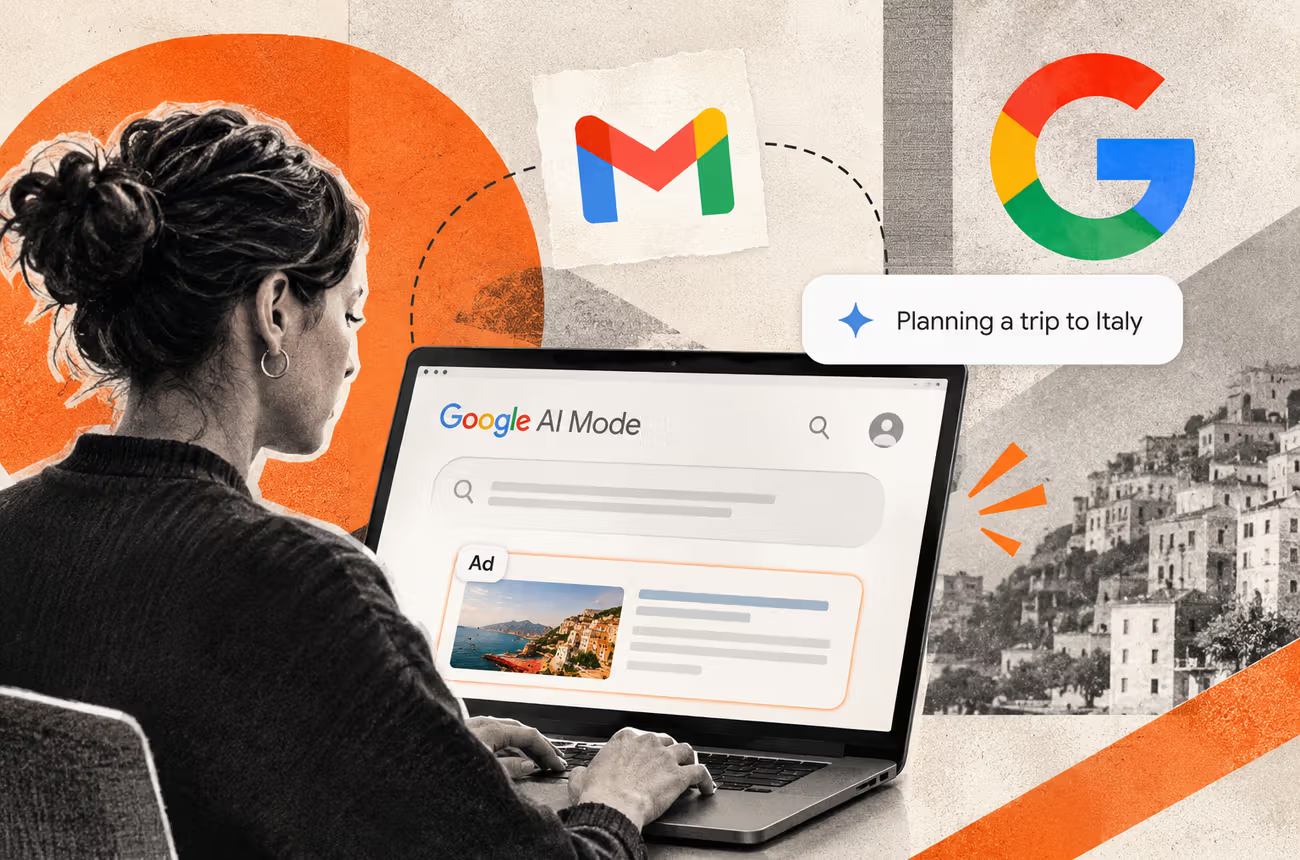
Google’s ad-free arrangement for people who link Gmail and Google Photos to its AI search lasted seven months. In March the company told Search Engine Land there were no ads for users who connected their apps to AI Mode. On 16 October it told the same outlet it had started testing them.
The test covers people who opt into Personal Intelligence, the feature that lets AI Mode draw on a user’s own Gmail and Photos when it answers. Google rewrote its Search Help page and its privacy policy the same day. The Help page says ads will not be based directly on a user’s inbox or photo library. The summaries, excerpts and inferences Search takes from connected apps to personalise answers are treated differently: “that same info may be used to show you ads”.
The change matters to search marketers less for what it adds to their toolkit than for what it alters underneath it. Google has announced no audience, bid adjustment or report tied to connected-app signals, and says advertisers cannot see users’ Gmail or Photos. What moves is the context Google uses to decide which ads appear, a layer advertisers do not control and, for now, cannot separate out in their data. The test lands as Google pushes AI Mode ads into ten more countries, with the UK among the markets scheduled for the fourth quarter.
What exactly has Google changed in AI Mode?
Google’s change has two parts: a test of ads for Personal Intelligence users, and a policy rewrite that permits it. The privacy policy, effective 16 October, still says Google does not show personalised ads based on content from Drive, Gmail or Photos. It now adds an exception for users who choose to make that data available to other Google services that support personalised ads, and names Search as a service that may process data a user lets it access to personalise content, including ads.
Google draws its line between raw content and what it derives from that content. According to the Help page, ads are not matched to individual emails or photos, but the inferences used to tailor AI Mode answers may inform them. Ads still reflect the user’s query, the context of the AI response and their wider interests, Google told Search Engine Land. Sensitive categories, which the Help page lists as race, religion, sexual orientation and health, are excluded from ad personalisation. Users can disconnect apps at any time, although the page notes that disconnecting does not delete data already held in their Search history.
Google has not disclosed how many people are in the test, which countries it runs in, how long it will last or which ad formats appear inside it. Search Engine Roundtable, which tracked the earlier version of the Help page, reported that the advertising language was not there before the update.
Who will see these ads, and who will not?
Personal Intelligence users are a narrower group than AI Mode’s full audience. Google launched the feature on 22 January as a Labs experiment for Google AI Pro and AI Ultra subscribers in the US, limited to English and personal accounts. It reached free US users in AI Mode on 17 March, TechCrunch reported. The feature is off by default; a user has to switch it on and choose which apps to connect.
Workspace business, enterprise and education accounts have been excluded from Personal Intelligence since launch. For B2B advertisers this is the most practical detail in the story. A buyer’s work inbox is not a source for these inferences. Any connected-app signal comes from a person’s personal Google account, their private email and photo library, rather than the supplier threads in a corporate Gmail.
Availability outside the US is less settled. Google’s Help page now says connecting apps to Search is open to users aged 18 and over in many countries across the Americas, Asia-Pacific and Europe, the Middle East and Africa. The Hacker News, reporting on 24 October, described the Gemini version of Personal Intelligence as unavailable in the EEA, Switzerland, the UK and Nigeria. Google has not said which markets the ad test covers.
What does the test mean for search advertisers?
Search advertisers get no new settings from Google’s test. No campaign option selects Personal Intelligence users, no audience segment is built from connected-app signals, and Customer Match and Performance Max work as they did before. Google says advertisers will not have access to users’ Gmail or Photos.
Any effect will show up in where and when ads match, not in anything advertisers can set. AI Mode queries already run about three times longer than traditional searches, according to Google’s US data from May, and The Marketing Helm reported in July that content has been slow to adapt to that shift (Google’s AI Mode data: searches are 3x longer and content hasn’t caught up). An answer shaped by a user’s inbox puts one more layer of context between the keyword and the ad.
Google has published no performance figures for the Personal Intelligence test. Its 28 October post on the wider AI Mode rollout, written by Shashi Thakur, Google’s vice-president and general manager for Search Ads and Ads on Google Experiences, said click-through rates for sponsored and organic product-list items in AI Mode were already similar. The figure comes from internal US data covering 20 August to 3 September; the post gives no rates, sample size or comparison with standard Search ads. The same post said AI Mode ads will carry a Sponsored label and that multiturn ads, which can appear in follow-up questions, are launching in the US.
For B2B search teams, the evidence so far supports measuring rather than rebuilding. That means separating AI Mode results from standard Search wherever reporting allows, watching search-term and conversion trends as AI Mode ads reach the UK, and recording in privacy and brand-safety reviews exactly what Google says about derived data, so the wording is not overstated to clients or legal teams. The pattern matches September’s test of exact-match ads in AI Mode, which also arrived without an advertiser opt-out (Google tests exact match ads in AI Mode, leaving advertisers no opt-out): decisions about where ads appear are moving into Google’s systems faster than reporting is coming out of them.
Google has not said when, or whether, the Personal Intelligence test will become a standard part of AI Mode, or whether it will reach the UK alongside the wider ad rollout due this quarter.