ChatGPT ads reach 31 European markets with self-serve buying still shut
Update, 7 September 2026: OpenAI opened self-serve buying across these 31 markets on 31 August. ChatGPT opens ad self-serve to Europe as one in seven ads misses its topic has the detail.
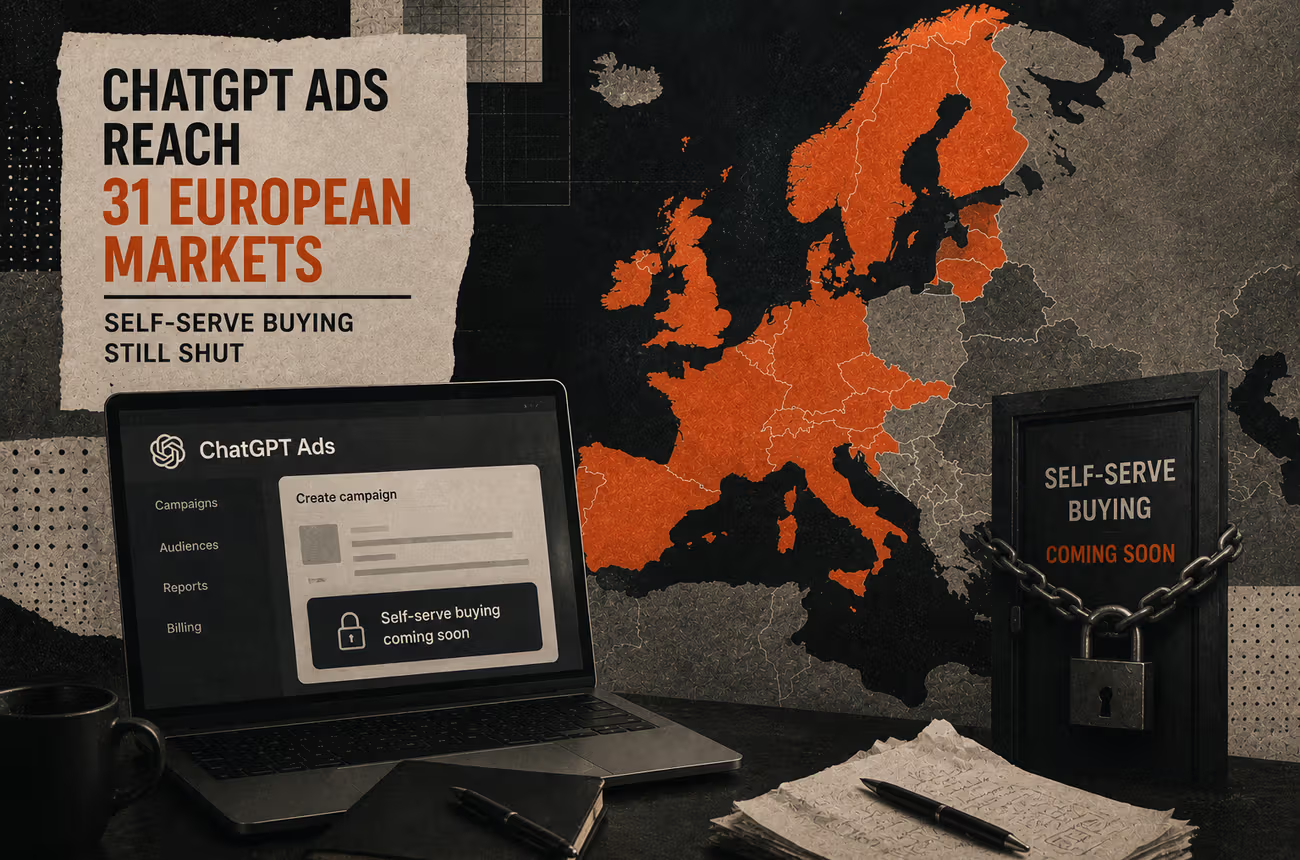
The day ChatGPT ads reach Europe is the day most European marketers discover they cannot buy them. OpenAI confirmed the expansion on 18 August, naming Germany, France, Spain, Italy, Sweden, Norway, Denmark, the Netherlands and Austria among the 31 countries, and said advertisers would reach the inventory through its Ads Solutions team, agency partners and technology partners. Self-service access through Ads Manager, the company wrote, arrives later this summer. It gave no date.
Serving begins on Monday 24 August, according to Digiday and reporting by the German news agency dpa. Ads appear only to users on the free tier and the Go plan, which costs €8 a month, roughly £7. Plus, Pro and Enterprise accounts stay clear of them.
OpenAI has told investors it expects $100bn in revenue within four years, and its advertising business turns six months old this week. That pressure explains the pace. It does not answer the two questions a European marketing manager has to settle before committing a budget, which are who they can buy through in the meantime and how much targeting survives a consent regime built for GDPR.
How can European advertisers buy ChatGPT ads from Monday?
OpenAI is selling ChatGPT Ads in Europe through its own sales team and six agency groups rather than a self-serve interface. From Monday, advertisers in the new markets can buy through Publicis, Omnicom, WPP, Havas, Dentsu and MediaPlus, Digiday reported. Businesses outside those relationships are directed to register at ads.openai.com.
The United Kingdom is the useful precedent, because it went through the same sequence in June. ChatGPT advertising activated for UK users on 6 June, the first European market, and ran through agency representatives rather than self-serve tools. The Marketing Helm reported that self-serve access opened to UK advertisers on 22 June, sixteen days later. That is the closest thing to a schedule OpenAI has given Europe.
The United States took longer and cost more. OpenAI opened Ads Manager to all US businesses on 5 May, and Digiday reported that the tool had launched that spring carrying a $50,000 minimum spend, since dropped. Nothing in the European announcement sets a floor, because there is nothing yet for a European advertiser to spend against directly.
What targeting will European campaigns actually get?
OpenAI has made consent the legal basis for personalised advertising in Europe, so the depth of a campaign’s targeting depends on how many users agree to it. The company published a European Union privacy policy on 14 August, taking effect at the end of the month, setting that out. Users on the free and Go tiers can choose what data feeds personalisation through advertising controls in account settings, and can withdraw that consent later.
Users who decline still see ads. For them, OpenAI narrows targeting to the live conversation and an approximate location, leaving chat history and memory out of it. The distinction matters commercially, because the size of the consenting pool sets the ceiling on how precise a European campaign can be, and no figure for it exists yet. Meta reached the same consent position only after years of regulatory defeats; OpenAI has started there.
The platform underneath has grown since February. OpenAI says it has moved beyond CPM and CPC bidding to support conversion optimisation, added geo-targeting and custom audiences, and extended measurement past clicks through the OpenAI Pixel, a Conversions API and third-party integrations. Cost-per-click now accounts for most spend on the platform, according to Digiday.
Two limits bite hardest on business-to-business work. Custom audiences require at least 25,000 matched users before a campaign can use them, with 100,000 recommended, which puts a named-account list of a few hundred companies out of reach, as The Marketing Helm reported when AdRoll opened its ChatGPT pilot. And because ads run only on the free and Go tiers, the senior buyers whose employers pay for Business or Enterprise seats are outside the addressable audience entirely.
How proven is the platform European budgets would be buying into?
OpenAI has published growth figures for its advertising business and no performance benchmarks for the advertisers inside it. Colin Fleming, the company’s enterprise chief marketing officer, told a briefing call that ad revenue had risen more than 25% since the start of August, and that ChatGPT now has one billion weekly active users, of whom 20% show commercial intent, according to Adweek. OpenAI’s own announcement says tens of thousands of marketers have advertised on the platform, a figure it did not evidence.
The base those percentages sit on is smaller than they suggest. Chief financial officer Sarah Friar told investors this month that the advertising business is approaching a $1bn run rate, eMarketer reported, against the $100bn total revenue target inside four years. A quarter added to a billion is a different proposition from a quarter added to Meta’s advertising line.
Agencies running the pilot describe a product still being built underneath them. Victor Batista, senior director of paid media at Jellyfish, whose clients are in the pilot, told Digiday the platform remains unproven and that what advertisers use now bears little resemblance to the pilot released in April. That churn has already reached live campaigns: OpenAI redefined ChatGPT Ads daily budgets as seven-day averages on 27 July, applied the change to campaigns already running, and published no route back to a fixed daily ceiling.
OpenAI has set no date for Ads Manager in Europe. The last time it opened a European market, self-serve buying followed sixteen days later.