OpenAI turns ChatGPT ad daily caps into averages that a day can double
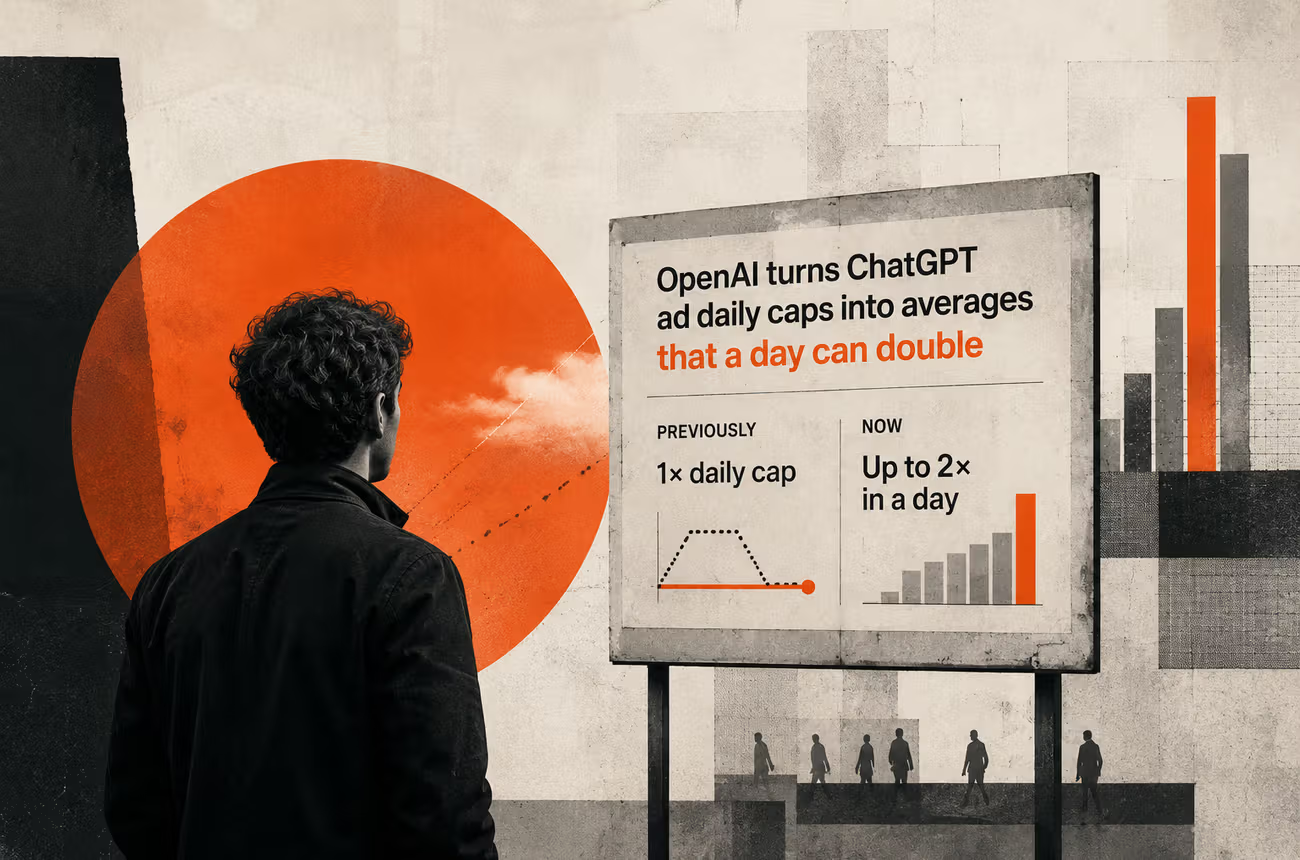
The number a marketer types into the ChatGPT Ads budget field stopped meaning what it appeared to say on 27 July. OpenAI redefined the daily budget from a fixed per-calendar-day ceiling into an average across seven days, applied the change to campaigns already running, and told advertisers no action was required.
Just over nine weeks separated the control from its redefinition. Daily budgets arrived in ChatGPT Ads Manager on 22 May as hard per-day caps, and by late July they were something else. The timing matters for British teams because ChatGPT advertising is no longer a United States test: it activated in the United Kingdom on 6 June, and self-serve access opened to UK advertisers on 22 June. Adthena counted 7,378 distinct advertisers inside ChatGPT in the week of 13 to 20 July, according to PPC Land.
What does a ChatGPT Ads daily budget mean now?
OpenAI’s help centre defines a daily budget as the average amount a campaign spends per day over a seven-day period, not the most it can spend in one. Two multipliers bound it. Maximum spend on a single day is twice the daily budget. Maximum spend across the seven-day period is seven times the daily budget.
For a team setting £500 a day, that is up to £1,000 billed on one day and no more than £3,500 across the week. OpenAI’s documentation illustrates the same arithmetic with a $100 daily budget and a $700 seven-day limit, about £75 and £525.
Two operational details sit underneath those numbers. Changing a daily budget mid-day sets that day’s maximum against the highest amount active at any point during it, so raising £500 to £510 in the afternoon lifts the ceiling for that day to £1,020. Changing it mid-week prorates the seven-day limit from the moment of the change through the following Sunday at midnight, which anchors the window to a calendar week rather than a rolling one.
Existing campaigns moved across on their own. OpenAI’s guidance is that advertisers do not need to recreate, pause or edit anything, budget amounts and campaign settings stay as they were, and Ads Manager keeps the “Daily budget” label while displaying the applicable spending limits during campaign setup. The documentation describes no way to keep the previous fixed-cap behaviour.
How does this compare with Google’s averaged budgets?
Google Ads has run average daily budgets for years on nearly identical terms. Google’s published limits are a daily spending limit of twice the average daily budget and a monthly spending limit of 30.4 times it, the average number of days in a month. OpenAI’s daily multiplier is the same figure.
The reconciliation window is where the two diverge, and it favours OpenAI. Seven days is a far shorter leash than 30.4, so a ChatGPT campaign is trued up weekly where a Google campaign is trued up monthly, and spend drifts less far before the system corrects it.
The disclosure sequence is less tidy. PPC Land reported on 3 August that OpenAI’s advertiser email asserted a daily limit without ever quantifying it, and concluded that no numerical daily ceiling had reached advertisers. Both multipliers were on OpenAI’s help centre page when The Helm checked it on 14 August, on an article carrying a last-updated date roughly two weeks earlier. OpenAI publishes no revision history for help articles, so when the figures appeared cannot be established from the public record.
Google spent the first half of 2026 moving the other way. Campaign total budgets, which fix an unbreachable spending total across a set window, are available for Search, Standard Shopping, Performance Max, Demand Gen and YouTube campaigns with specific start and end dates. ChatGPT Ads has no equivalent control.
What does averaging break for date-anchored campaigns?
Campaigns tied to specific dates are where averaged pacing costs the most. A product launch, a webinar, a conference week or a promotion with a hard cutoff all assume a stable relationship between the figure in the interface and the money leaving the account on a given day. Under averaging, the system decides which days inside the week deserve more, and a finance team reconciling by calendar day is checking against a number that no longer describes one.
The same product update added intraday pacing, which spreads spend more evenly through the day. The two features work on different axes: pacing smooths delivery inside a day whose total the system has already chosen to raise or lower. Even delivery is not the same thing as predictable spend.
Auction conditions sharpen that. When the UK auction opened, brands saw cost-per-click swings ranging from 39% to 278% with no visibility into which competitors had entered against them, in figures Adthena disclosed alongside a partnership with Dentsu and reported by PPC Land. ChatGPT’s native reporting returns an advertiser’s own numbers and nothing about anyone else’s.
The recalibration is arithmetic. A daily figure is now a weekly figure divided by seven, and the ceiling on any single day is double it. A team that cannot tolerate more than £600 billed on one day sets a daily budget of £300.
The budget item did not travel alone. The same note listed conversion-optimised campaigns under a Conversions objective, geographic exclusions, AppsFlyer and Adjust integrations for app measurement, automatic advanced matching for hashed conversion data, a bulk API and a refreshed product card carrying price and star ratings. Those seven added controls. The eighth redefined one that already existed.
OpenAI has not published a fixed total-budget control of the kind Google offers, and its documentation sets out no way to opt a campaign out of averaged pacing.