FIFA’s clean-stadium rule covered Levi’s and Heinz — and they went viral
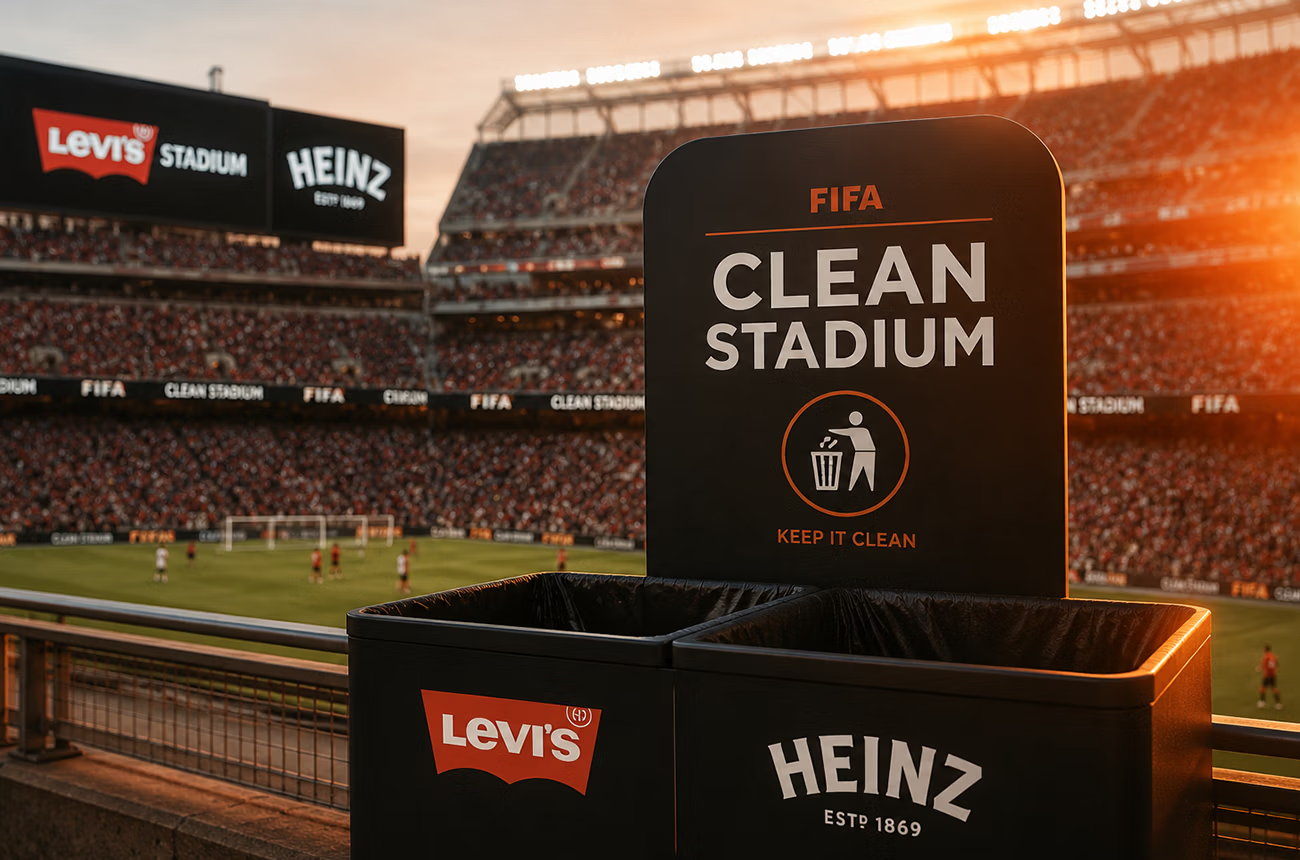
The most-shared marketing of the 2026 World Cup so far has come from companies FIFA tried to make invisible. At the renamed San Francisco Bay Area Stadium — ordinarily Levi’s Stadium — a plain white tarp covers the Levi’s wordmark, but the outline of the batwing logo, unchanged since 1967, is still unmistakable. Levi’s leaned in: it swapped its Instagram picture for the shrouded sign, posted clips set to the “nobody’s gonna know” audio, and draped white sheets over shopfronts from Paris to Hong Kong.
Levi’s is not an official World Cup sponsor, so under FIFA’s “clean stadium” rules its existing branding had to be concealed at controlled venues — the brands were not “banned”, as some coverage framed it. FIFA enforces those rules to protect the exclusivity its paying partners buy, and it has renamed 15 sponsor-named stadiums and taped over everything from seat logos to ketchup bottles to do it. What it could not control was what happened next: the coverings themselves became the campaign, shared for days by brands, fans and the marketing press. The popular conclusion — that the excluded brands beat FIFA — is more complicated than it looks.
Why did covering the logos make the brands more visible?
Levi’s stayed recognisable because a mature brand is more than a readable name. The batwing silhouette, the denim heritage and the red tab do the identifying work the wordmark usually gets credit for; cover the words and the shape still says Levi’s. Heinz proved the point from the other direction. Its bottles were served in stadium hospitality despite Heinz not being a sponsor, so the labels were blacked out with tape — and Heinz turned the redaction into the creative, releasing an “Unofficial Stadium Ketchup” with a censored label and inviting audiences to recognise the bottle by its shape and contents alone. The two brands amplified each other, with Levi’s commenting publicly on Heinz’s post, and Beats made the same move when FIFA’s rules required the German midfielder Jamal Musiala to tape over the logo on his personal headphones: the brand covered its own profile picture to match. The lesson under the jokes is an old one about distinctive brand assets: shape, colour and packaging can carry recognition when the logo is gone, but only for brands that have spent years building them. A less familiar company under the same tape simply disappears.
Did the covered-up brands actually beat FIFA?
Winning the feed is not the same as winning the rights, and the gap between the two is large. FIFA’s 2026 sponsorship programme has sold out and is on course for a record the organiser and analysts put at roughly $2.7bn to $2.8bn, with top-tier partners such as Adidas, Coca-Cola and Visa paying an estimated $70m to $100m a year for category exclusivity, licensed tournament marks, hospitality, retail rights and campaigns that run for months. A profile-picture swap is free and fast; it buys none of that. The irony cuts deeper for Levi’s, which pays for the name it had to hide: SFGate reports the company has committed about $390m to the stadium — a 20-year, $220m deal plus a $170m extension agreed in 2024. Sponsorship advisers are blunt that the underdog framing flatters the ambusher. Most opportunistic campaigns are perfectly legal, the strategist Ricardo Fort notes, and the contest “is rarely won in court”; it is won by sponsors activating their rights well enough that no outsider can match the access. Lawyers reviewing the episode add that the coverings sat within the letter of standard clean-stadium clauses while subverting their spirit, which leaves the real division between share of conversation, which an excluded brand can seize for a week, share of official inventory, which FIFA controls outright, and commercial return, which is rarely visible and far harder to win on a meme.
Was the cleverest cover-up even real?
Gillette’s contribution is a useful warning about taking viral marketing at face value. The brand was widely credited with the smartest response of all — covering its stadium sign with what looked like a giant blob of its own shaving foam — and design and marketing sites repeated the claim as an ingenious physical activation. Photographs from the venue, now renamed Boston Stadium, tell a duller story: the real coverings are ordinary blue tape over the logos on the seats, and the foam image appears to be a digital edit rather than anything installed at the ground. That makes a stunt about concealment one that also blurred the line between a real venue activation and generated content, and it travelled precisely because few people stopped to check. FIFA can decide whether a logo is visible inside its stadiums. It cannot decide what audiences infer from the shape of a covering, what a brand does with the image afterwards, or whether the version that goes viral was ever really there.