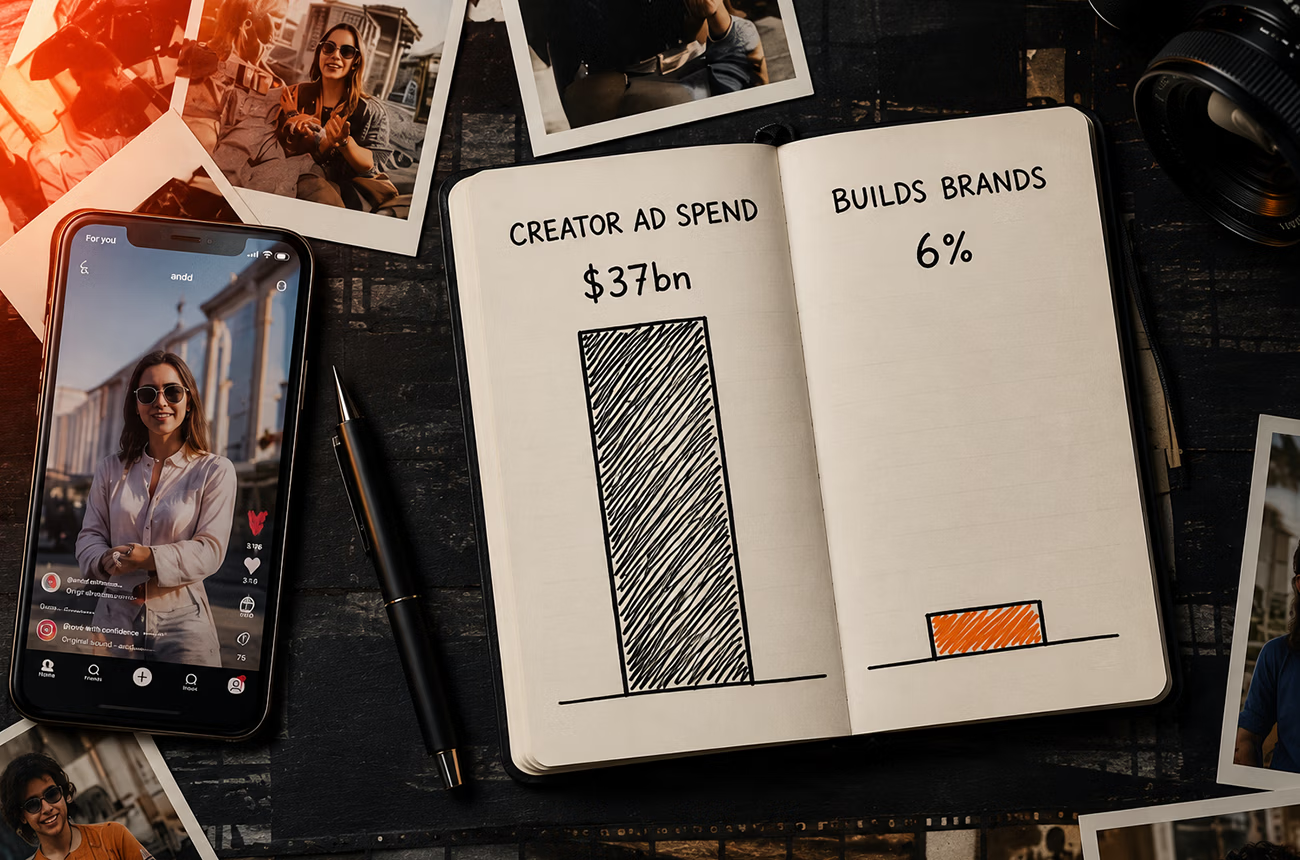
Creator ad spend hit $37bn, but Cannes data shows just 6% builds brands
Creator advertising arrived at Cannes Lions 2026 not as the festival’s novelty act but as part of its plumbing. The creator economy had its own five-day programme, a dedicated stretch of beach, a headline sponsor in Adobe and a discounted pass priced at €1,245 before tax. What it did not yet have, on the evidence presented across the same week, was a reliable way to prove the money was working.
The festival, which ran from 22 to 26 June, framed two stories as rivals — the rise of AI and the rise of creators — when they are closer to two halves of one shift. Generative tools have made polished advertising cheap and abundant: the IAB found half of advertisers already using generative AI to build video ads, and 86% using it or planning to. When competent content stops being scarce, a recognisable person with a trusted audience becomes the scarce asset. That is why creators and AI dominated the same Croisette, and why US creator ad spend reached $37bn (about £28bn) in 2025 even as the cost of making an advertisement fell.
Why did creators and AI rise together?
AI is what made human creators more valuable, not less. As generative video moves from experiment to default — 83% of advertising executives told the IAB in January their firms had deployed AI in the creative process, up from 60% in 2024 — the differentiating ingredient shifts away from production quality, which anyone can now buy, towards identity, community and trust, which they cannot. Social platforms are where most of that spend lands: social-media ad revenue reached $117.7bn in 2025, up 32.6%, with the IAB crediting the scaling creator economy as a leading cause.
The same logic is reshaping where advertising is sold, not just how it is made. OpenAI made its first official Cannes appearance to promote advertising inside ChatGPT, having begun testing ads in the United States on 9 February and added self-serve buying in May; it says it plans to extend the pilot to the UK and four other markets, though that expansion was not yet live during the festival. Amazon, meanwhile, used a yacht presentation to unveil a Fire TV Creator Hub — more than 120 creators already on the platform, with a stated target of 500 by next year — pitched explicitly as a fix for the discovery problem that the flood of content has created. Across production, placement and distribution, automation is making advertising more abundant; the trusted human is the hedge against all of it starting to look the same.
How big is the budget shift, and where is the catch?
Creator advertising has moved from a line within social budgets to a channel brands say they cannot skip. US spend has more than doubled since 2021, from $13.9bn to $29.5bn in 2024 and on to $37bn in 2025 — growth of 26% in a year, roughly four times the rate of the wider US ad market, with the IAB projecting $44bn for 2026. Nearly half of buyers (48%) now rank creators a “must-buy”, behind only paid search and social media.
The catch is measurement. Kantar analysis of more than 15,000 branded creator posts on TikTok, Instagram and YouTube Shorts, presented at Cannes, found just 6% delivered both strong engagement and strong brand-building; the figure rose only to 27% at medium-to-high levels of both. The IAB, which tracks the spend, has been blunt that creator advertising still lacks the common standards and currencies that let finance teams compare it with television or search, and a third of the 453 buyers it surveyed named finding the right creator as their hardest problem. For a marketing manager under pressure to “do more with creators”, that is the real story behind the budget line: the channel is real, but engagement figures alone will not survive a procurement review, and the proof that does is still being assembled.
What did Cannes actually formalise?
Cannes turned a trend into infrastructure. LIONS Creators, first run as a small programme in 2024, moved this year from a rooftop to a prime beach venue with its own stage, content studio and editing suite, with Adobe as headline sponsor; the festival also added an AI Craft awards subcategory and a new Creative Brand Lion. The creator pass, at €1,245 before tax against roughly €4,465 (about £3,850) for a classic ticket, signals both the courtship of creators and the cost of entry — a reminder that the economy rewards its largest players first.
What Cannes did not settle is what marketers most need settled: who owns the content and the likeness once a contract ends, whether AI-assisted creator work is disclosed — the IAB found fewer than half of advertisers always disclose AI use — and whether a deal buys a media placement or a genuine creative partnership. Kantar’s own conclusion, drawn from the same data the festival applauded, was plainer than the mood on the beach: high engagement and brand effectiveness, its global creative director said, more often than not do not align.