Similarweb launches a tool to track ads in ChatGPT and Google AI answers
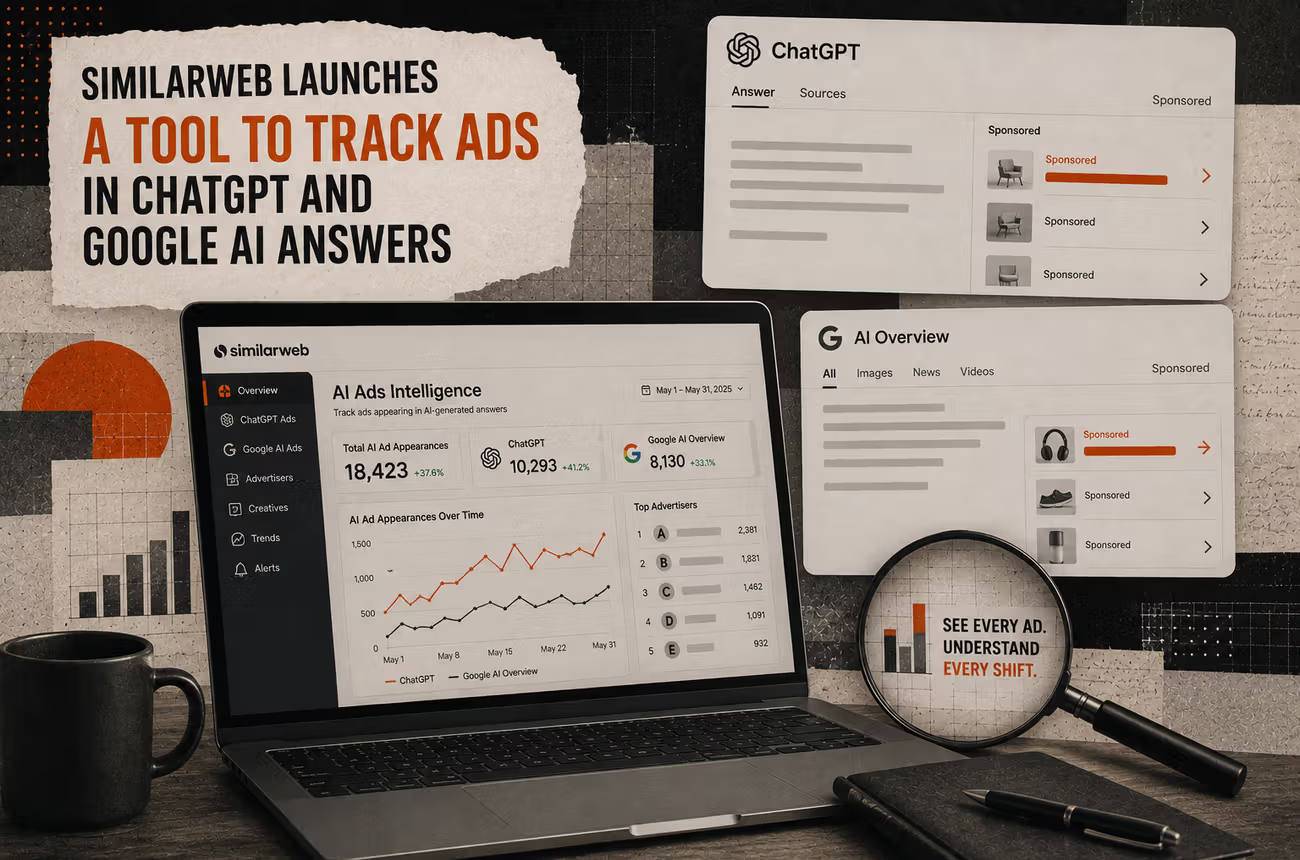
For six months, ads have been surfacing inside AI answers with almost no way for anyone outside the platforms to see them. Similarweb moved to close that gap on 17 August, launching AI Ads, a competitive-intelligence data set that shows which brands are running ads inside ChatGPT, Google AI Mode and Google AI Overviews.
The launch matters because AI answer engines have become an advertising channel faster than marketers have gained any means to watch one. Similarweb’s own panel data, published with the launch, puts sponsored placements in 26% of ChatGPT responses shown to Free and Go tier users and nearly 30% of ad-eligible Google AI Mode queries. Every other major ad channel, from Meta to Google search to TikTok, carries a public archive of live ads. The AI surfaces where a growing share of buyers now begin their research carry none, and until this release even an advertiser’s own placements there were largely invisible to its own team.
What does Similarweb’s AI Ads actually show?
Similarweb’s AI Ads presents its findings through an Ads Gallery, a view of which ads are running across ChatGPT, Google AI Mode and Google AI Overviews, in what context, worldwide and by individual market. The data is drawn from real user panel conversations rather than synthetic prompts, which the company argues is what lets it catch placements automated testing misses, because ads in ChatGPT tend to appear later in a conversation, once a user’s intent has sharpened.
The current release is descriptive rather than analytical. It shows the ad creative and the context in which it ran, but it does not yet report an advertiser’s share of voice, break placements down by category, or map them to conversational intent. Similarweb says those measures will follow in later releases, which puts the fuller competitive picture on a roadmap rather than in the product marketers can open today.
How many AI answers already carry ads?
Similarweb puts ad penetration on AI surfaces higher than many marketing teams would assume. By its count, 26% of ChatGPT responses to Free and Go tier users already carry a sponsored placement, nearly 30% of ad-eligible Google AI Mode queries show ads, and more than 40% of Google searches now trigger an AI Overview, many of which include them. The figures are the company’s own, drawn from its user panel, and independent trackers have recorded the ChatGPT share swinging sharply from week to week rather than settling at one level, so the penetration reads as real but still volatile.
The reach has limits worth holding. OpenAI shows ChatGPT ads only to logged-in adult users on its Free and lower-cost Go tiers, as labelled sponsored blocks beneath the answer, while Plus, Pro, Business and Enterprise accounts see none, so a share of the senior buyers on company-paid plans sits outside the channel altogether.
The channel itself is no longer experimental. OpenAI began testing ads in ChatGPT for United States users on 9 February, opened a self-serve Ads Manager on 5 May, and switched advertising on for the United Kingdom in June. The Marketing Helm has reported how AdRoll opened a managed ChatGPT ads pilot aimed at B2B teams and how OpenAI turned fixed daily budget caps into seven-day averages without advertiser action, both signs of a channel maturing quickly while the means to observe it lag behind.
The placements are worth watching because the audience behind them is converting. Separate studies have found that leads arriving through AI search convert at markedly higher rates than those from traditional search, which raises the stakes on knowing who is already buying visibility on these surfaces and who is not.
Why has this been invisible until now?
AI answer engines built an advertising business without the transparency infrastructure every other channel acquired over years. Meta has its Ad Library, Google its Ads Transparency Center and TikTok its Creative Center, public records that let any marketer inspect a rival’s live ads. ChatGPT, Google AI Mode and Google AI Overviews launched advertising with no equivalent, and Similarweb notes that advertisers buying through Google’s wider ad programmes are often blind even to their own placements inside AI answers.
That blind spot is what AI Ads is built to fill, and Similarweb, a business that sells competitive intelligence, positions it as the first product to do so. “Until today, nobody could see it at all,” said Harel Amir, the company’s general manager and head of product for Ad Intelligence. The practical value for a marketing team is line of sight rather than a new lever to pull: the ability to check whether competitors are buying against high-intent queries, in which markets and with what messaging, before deciding whether the channel warrants a test of their own.
That is a different thing from a reason to spend. The honest reading of a first-mover intelligence product is that it shows a channel’s shape without settling whether any given brand belongs in it, which leaves the useful first move an audit rather than a budget line.
AI Ads sits within Similarweb’s existing Ad Intelligence suite. The company has not disclosed standalone pricing for it, or a date for the share-of-voice, category and conversational-intent data it says later releases will add.