OpenAI gives ChatGPT agents a wallet, then asks websites to let them in
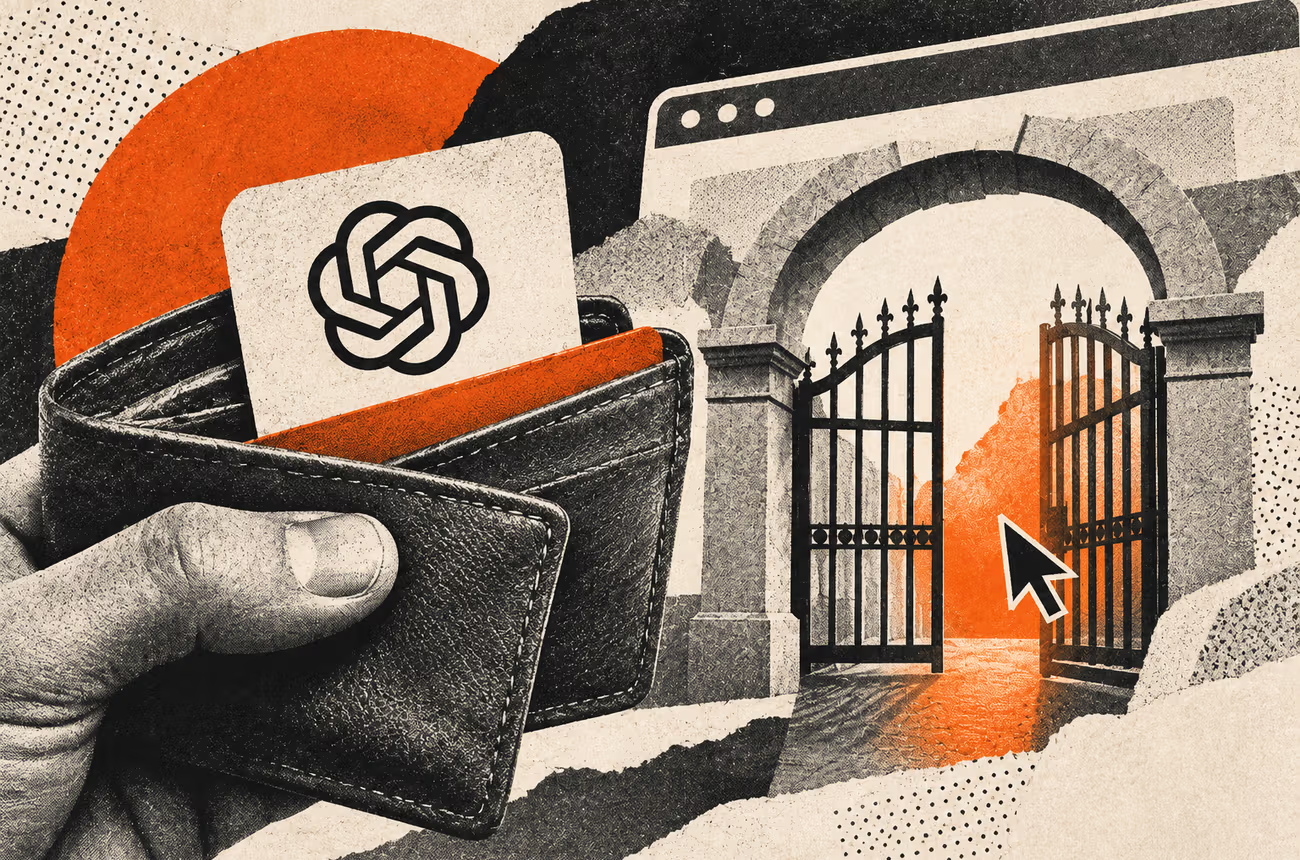
OpenAI’s agents can now pay for things. Whether shops let them in is a separate question, and not one OpenAI can settle on its own.
ChatGPT Wallet, announced on 13 November and built with American Express, Mastercard and Visa, lets OpenAI’s always-on dots agents complete purchases on websites without seeing the user’s card number. It is open to a small group of ChatGPT Pro subscribers in the US who are 18 or over and hold eligible US-issued cards.
The launch came with a Commerce Partner Playbook asking businesses to stop blocking signed agent traffic and to tune fraud checks so genuine agent purchases are not declined. Two days earlier, United Airlines rewrote its contract of carriage to ban unauthorised third-party AI agents from booking, buying or managing tickets, joining Amazon and eBay among sellers that keep agents out, according to Bloomberg. For marketing teams that own a website, a pricing page or a self-serve checkout, agent access is shifting from a firewall setting to a commercial decision.
How does ChatGPT Wallet pay without the card number?
ChatGPT Wallet replaces the card number with a network token at the point of purchase. The user adds a card once. Before each purchase, the dot shows the items, the total and the chosen card, and the user approves with Face ID, a fingerprint or a similar check. The payment network then issues a stand-in card number with its own security code and expiry date, and the charge lands on the real card behind it.
Neither the agent nor the merchant receives the actual card details, according to OpenAI, and the card keeps its rewards and its protection for eligible disputes. Each approval also leaves a record of what the user authorised, 9to5Mac reported, which gives both sides something to point to if a purchase is later disputed.
The limits are tight. Wallet works only inside dots, not in ChatGPT’s chat or Work interfaces or in Codex threads, Bloomberg reported, and OpenAI has given no date for wider availability. It says it expects users eventually to delegate purchases within set parameters such as spending limits, categories or time periods. That remains an ambition rather than a feature. Visa’s Intelligent Commerce tie-up with OpenAI, announced in June, promised agent payments within user-set limits but carried no launch date. Wallet is the first version to ship, and it keeps a person approving every transaction, consistent with the sign-off OpenAI already required before dots could buy anything.
What does OpenAI’s Commerce Partner Playbook ask businesses to change?
OpenAI’s Commerce Partner Playbook asks businesses to recognise ChatGPT’s agents instead of blocking them. The central request is that sites set their CDN or firewall to accept Web Bot Auth, a method of verifying cryptographically signed requests, so traffic from ChatGPT’s cloud browser can be told apart from scrapers. It also asks merchants to work with their payment and risk providers on how agent purchases are identified. OpenAI named the fraud-prevention firms Forter, Riskified, Sardine and Signifyd, and the payment providers Adyen, Checkout.com and Stripe, as partners on that work.
The tokens run through existing checkout flows, OpenAI says, so no Wallet-specific integration is needed, and agents can buy from any site that does not block them, with or without a ChatGPT plug-in. It also concedes that some sites may block agent purchases by accident and that fraud systems may flag legitimate ones, causing declines or cancellations. Help Net Security described the merchant’s position: retailers whose defences were tuned to stop automated checkout now have to sort wanted bots from unwanted ones.
The playbook reaches past access. According to OpenAI’s announcement, it asks businesses to claim and verify their listing in ChatGPT, keep a product feed current with pricing and availability, and consider plug-ins or WebMCP tools that let agents check stock and manage carts through existing systems. The first step overlaps with Business Hub, the free beta OpenAI opened on 12 November that lets firms claim a ChatGPT profile and see 28 days of mentions and clicks.
This is OpenAI’s second route to checkout in just over a year. Instant Checkout, launched in September 2025, needed brands to hand OpenAI their inventory; OpenAI shelved it in March 2026 and moved payments into third-party plug-in apps. Wallet sends the agent to the merchant’s own checkout instead.
Why are some businesses blocking AI agents?
United Airlines set out its reasons on 11 November. Its revised contract of carriage defines an AI agent as software that acts autonomously or semi-autonomously, even when a person supervises or approves its actions, and lists agent-made reservations among bookings United may cancel without notice. Agents may still display United’s fares; they may not transact. The airline cited the exposure of customer data, unintended purchases and possible breaches of federal aviation rules. On United’s definition, a dot purchase approved by fingerprint is still an agent purchase.
There is a commercial motive too. Brand websites block bots to protect their data, customer relationships and advertising revenue, Bloomberg reported. An agent that buys without browsing never sees the cross-sell, the retargeting pixel or the newsletter sign-up.
For B2B software vendors, the friction starts earlier in the journey. A Siteline benchmark found AI agents researching software prices hit errors on nearly a third of runs across 100 leading B2B sites, and when an agent was blocked from a vendor’s own page, most of its pricing answer came from third-party sources. Wallet does nothing for that research step. It adds a purchase step at the end of it, for products sold by card through a self-serve checkout.
That splits the decision by stage. Public pricing, trial sign-up, demo booking and card checkout each carry a different risk, and a vendor can open one to verified agents while keeping another closed. OpenAI’s playbook covers the mechanics of opening a door. It does not tell a business which doors to open.
OpenAI says the limited release is meant to help it work with businesses, banks and payment networks on compatibility and reliability, and it has not said when Wallet will reach users outside the US or below the Pro tier.


