The marketing org chart is being redrawn around outcomes, not channels
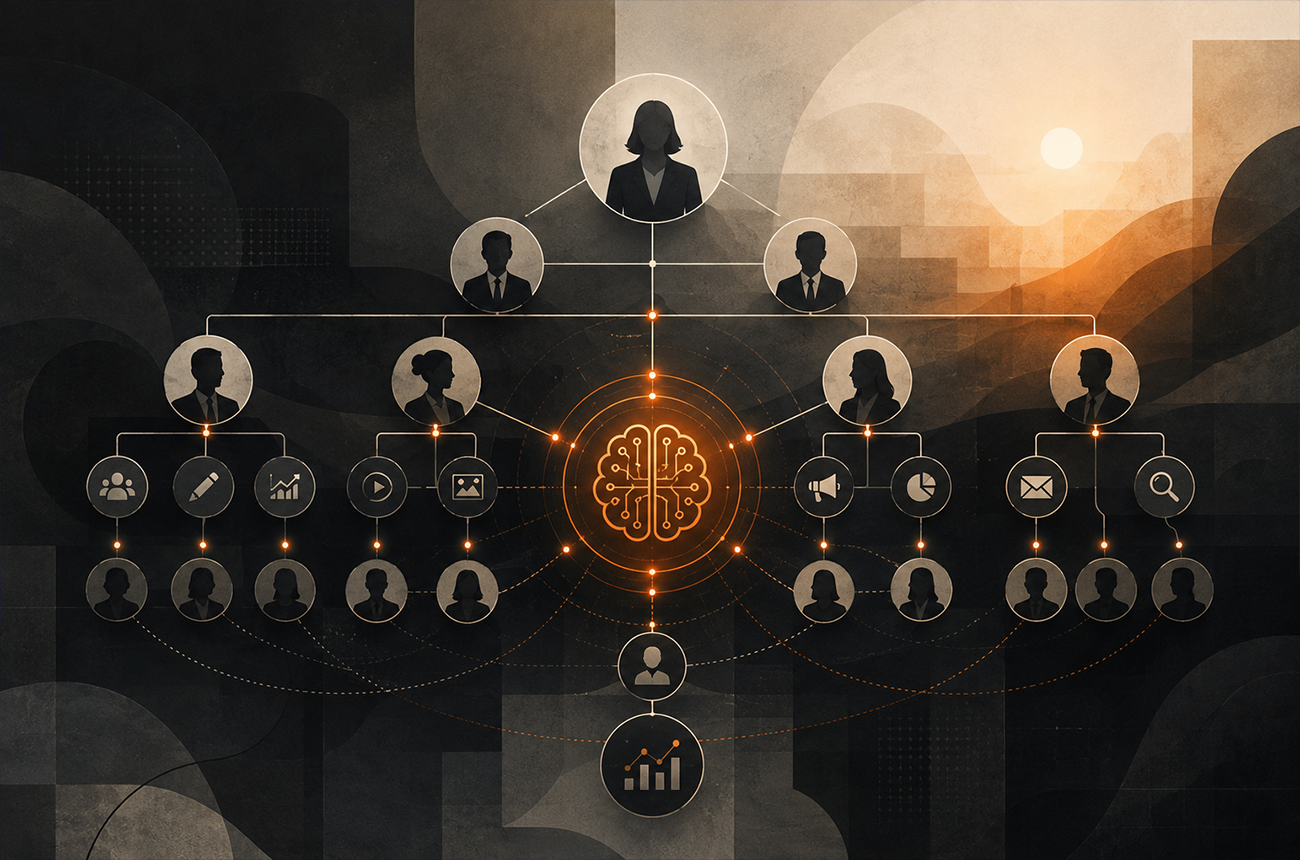
A convergence of research and hiring data from early 2026 shows B2B marketing teams moving from channel-based structures to smaller, multi-skilled groups organised around pipeline outcomes, with new specialist roles replacing the generalist middle layer that AI has made redundant.
The traditional B2B marketing org chart is built around channels. There is a content team, a demand generation team, a field marketing team, a digital team, sometimes a brand team operating separately from all of them. Each owns a channel, hands work between functions, and measures success against channel-level metrics. That model is under sustained pressure, and a recognisable alternative is emerging in its place.
Research from MarketProInc published in May 2026, drawing on interviews with CMO candidates and data from the 2026 hiring cycle, found that the strongest marketing leaders are moving toward integrated growth pods — smaller, multi-skilled groups that own outcomes end to end rather than passing work between specialists. A pod owns the full pipeline motion for a specific segment, product line or account tier, rather than contributing one component to a shared process.
Why the channel model is breaking down
Three forces are converging on channel-based structures. First, AI’s effect on execution: the tasks that justified separate specialist teams — writing content, running A/B tests, managing campaign builds, pulling performance reports — can now be handled by AI tools accessible to anyone in the pod, not just the specialist who previously owned that function. The production bottleneck that made specialisation necessary has largely disappeared.
Second, attribution: channel-based structures produce channel-based metrics, making it structurally difficult to connect marketing activity to pipeline and revenue. Growth pods, by owning the full motion for a specific segment, make the connection between marketing investment and commercial outcome much more direct.
Third, speed. In a channel-based model, moving a campaign from brief to live involves multiple handoffs, each adding time and the possibility of losing context. A pod that owns the full motion can move from insight to execution without waiting for another team’s capacity.
The new specialist roles
The restructuring is reshaping where specialisation sits and what it covers. The roles growing fastest in B2B marketing in 2026, according to MarketProInc’s hiring analysis, are concentrated in three areas: AI search and AEO specialists who understand how to structure content for citation by AI assistants; AI ops and workflow architects who build and maintain the automation infrastructure that growth pods run on; and performance auditors who monitor AI-generated outputs for quality, accuracy and brand alignment.
The roles shrinking are in the generalist middle: coordinators, campaign managers and content specialists whose primary value was volume of execution rather than strategic input or technical depth. Gartner’s 2026 CMO Spend Survey noted that 39 per cent of CMOs are planning headcount reductions, with overlapping roles as the primary target. The growth pod model provides the structural logic for those reductions.
What this asks of the people in marketing teams
The transition is uncomfortable for marketers who built their careers on channel expertise. Being the person who knows how to run LinkedIn campaigns or manage the email platform was a defensible position when those tasks required specialist knowledge. AI has substantially lowered the barrier to those skills, making them table stakes rather than differentiators.
The capability premium has shifted to judgment, strategy and system thinking. The marketer who understands which message to put in front of which segment at which stage of the buying cycle — and can direct AI tools to execute that at scale — is more valuable than the one who can operate the tools themselves.
GrowthMarketer’s April 2026 analysis of AI-native marketing org structures described the emerging creative director role as shifting from managing a design team to directing AI output with taste — the production management disappears, and what remains is the aesthetic and strategic judgment that determines which output gets used. That pattern repeats across most marketing functions. The execution moves to AI; the directing stays human.