Forrester's B2B Summit declares traditional go-to-market broken
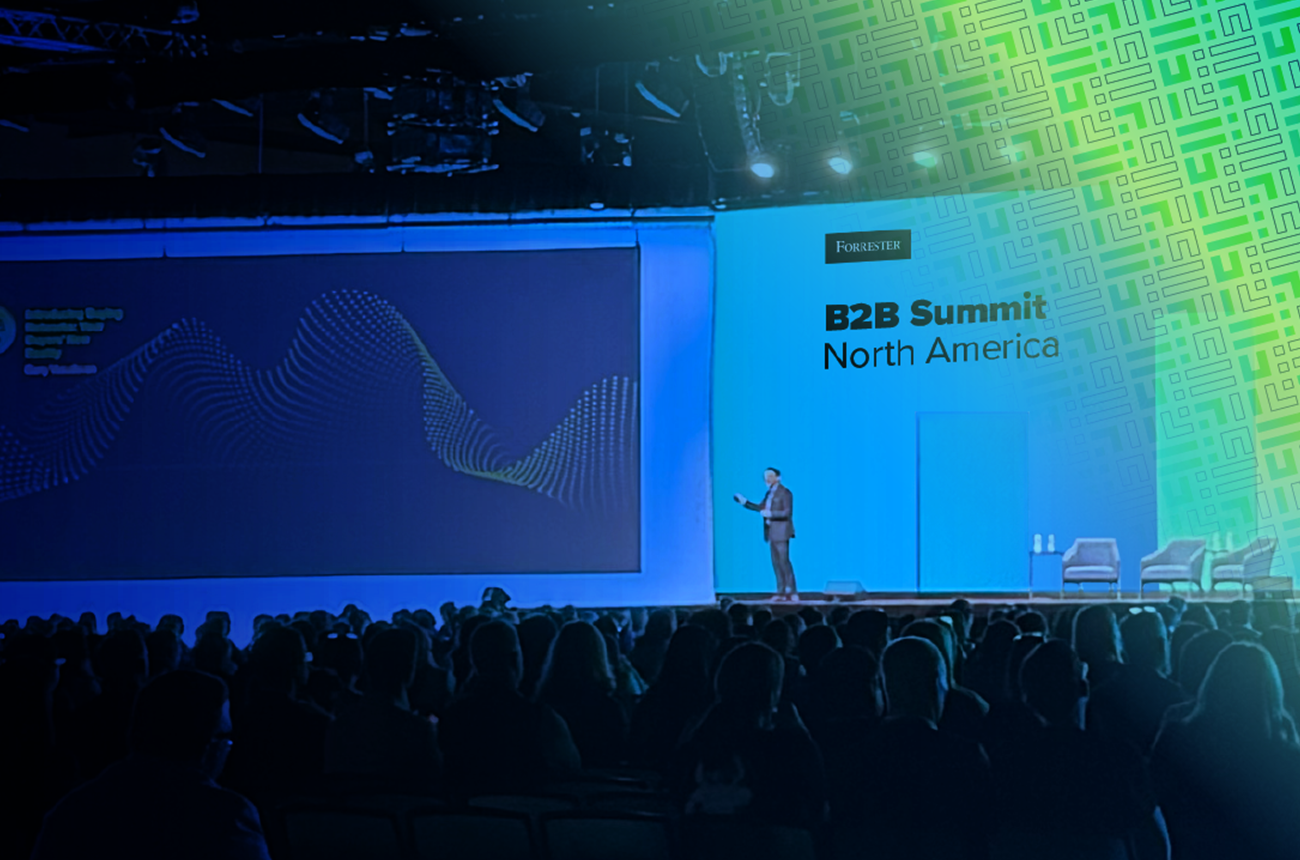
Forrester B2B Summit North America 2026, held in Phoenix in late April, opened with a declaration that traditional B2B go-to-market strategies have collapsed — framing its four-day agenda around ‘GTM singularity’: the convergence of AI-driven buyer behaviour, marketing and sales alignment, and the need to be discoverable before a buyer ever reaches a seller.
The theme Forrester chose for its 2026 B2B Summit was not a trend to watch. It was a verdict. With more than 90 per cent of business buyers already using or planning to use generative AI to support their purchase decisions, Forrester told the 2,000-plus marketing, sales and customer success leaders assembled in Phoenix that the traditional go-to-market model is no longer working — because most buying decisions are now shaped well before any seller enters the discussion.
The GTM Singularity framing, announced in January and built out across the April 26–29 programme, positioned the Summit as a reset event rather than an update. The agenda covered four overlapping challenges: how to be visible and trusted in an environment where AI assistants are the first point of research; how to align brand equity with pipeline performance; how to integrate AI into workflows without losing the human relationships that drive trust; and how to demonstrate accountability when GTM impact is increasingly expected but rarely measured cleanly.
What the keynotes addressed
Four keynote sessions structured the agenda. The Visibility Vacuum addressed AI-driven search reshaping buyer behaviour — as buyers use ChatGPT, Perplexity and Google AI Mode for early-stage research, the brands discoverable and trustworthy to those systems are the ones shaping shortlists before any sales conversation begins. The practical frame was answer engine optimisation: how to structure content, data and authority signals so AI assistants cite and recommend the brand reliably.
The brand and demand keynote built the case that brand equity and pipeline performance are mutually reinforcing when aligned correctly. The finding that 92 per cent of B2B buyers begin their process with at least one vendor already in mind, and 41 per cent already have a favourite before formal evaluation begins, makes brand investment a pipeline tool, not a luxury.
The Human and AI GTM session addressed how to embed AI into targeting, content, routing and personalisation workflows while preserving the human judgment and relationship quality that B2B buying cycles still depend on. The Accountability Reset closed the programme with the measurement challenge — the expectation from boards and CEOs that GTM functions demonstrate business impact, not just channel metrics.
The event’s significance for the 2026 conference circuit
Forrester B2B Summit is consistently the most analytically rigorous B2B marketing event in North America. The agenda is built on Forrester research rather than vendor sponsorship, which means the themes dominating the programme reflect genuine analyst judgment about what B2B marketing and sales leaders should be prioritising.
The GTM Singularity framing in 2026 is a signal worth reading. Forrester is not describing AI as one trend among several; it is describing an environment in which the established mechanisms of B2B marketing — MQL-based demand generation, channel-first strategy, brand investment separated from pipeline contribution — have been structurally disrupted by the shift in how buyers research and shortlist.
What came out of Phoenix
Attendees at the 2026 Summit reported that the most practically useful sessions were the breakouts on AI-first content strategy and the one-on-one analyst meetings — the structured access to Forrester researchers that only the in-person format enables. Certification courses on demand generation, ABM and revenue operations drew consistent attendance, reflecting the premium on validated skills in a market where role definitions are shifting fast.
The consensus theme that emerged across sessions was less about which AI tools to use and more about the operating model underneath them: what needs to change in how GTM functions are structured, measured and aligned before AI investment produces the outcomes the research says it can. Organisational readiness as the bottleneck, not tool availability — that framing ran through the programme from the opening keynote to the final breakouts.