UK regulator orders Google to let publishers opt out of AI search without losing their search ranking
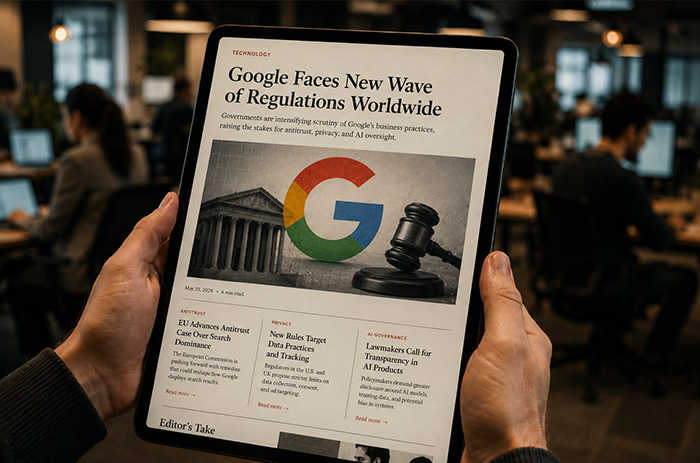
Britain’s Competition and Markets Authority has ordered Google to let publishers opt out of having their content used in its AI search features, such as AI Overviews and AI Mode, while staying in normal search results. The order, announced on 3 June, is the first big use of the powers the regulator won over Google last year, and the CMA calls the opt-out a world first.
Until now, the only way for a site to stop Google using its content in AI answers was to block Google’s crawler completely — which also removed it from the ordinary search listings that still bring most of its traffic. The ruling ends that all-or-nothing choice. A site can now refuse the AI features and keep its place in the standard results, and the CMA says doing so will not change its ranking.
What the CMA has actually required
The CMA brought in the rule as a “conduct requirement” — a binding condition it can place on Google. It rests on the “strategic market status” the regulator gave Google last October under the Digital Markets, Competition and Consumers Act, which lets it set rules for the most powerful platforms and fine them up to 10% of global turnover for breaking them. After a consultation over the winter, the opt-out is the first firm obligation to land.
It covers more than AI Overviews. Sites will also be able to opt out of AI Mode and of AI Overviews in Discover, and to stop their content being used to train Google’s AI models — a separate issue from how it appears in search. Google must also credit publisher content more clearly and link straight back to the source whenever that content shows up in an AI answer. Google says it will start by testing the controls with a small group of UK publishers before rolling them out more widely, and that opting out will not change a site’s position in normal search.
Why it matters beyond newsrooms
Google says its AI Overviews now reach more than 2.5 billion people a month, and its AI Mode has passed a billion. As those tools answer more questions directly, the click that used to follow a search often does not come. Publishers’ own figures show the drop, and any B2B marketer who has watched organic traffic slide has seen the same pattern.
Google disputes the gloomy reading. It argues that its AI features help people find content they would otherwise have missed, and that the full article is still only a click away. Both can be true: AI search can widen discovery and still send fewer people to any one page. The point for a marketing team is simpler — the thing eating into a familiar channel is now regulated, and the regulator has taken the side of the people making the content.
What a marketing team should do with the opt-out
Google’s new opt-out will tempt many teams to switch the AI features off. For most B2B brands, that is the wrong move. Buyers are starting to look for answers inside AI, not away from it, so a brand that opts out hides exactly where it most needs to be seen. The opt-out is more useful as leverage — something publishers and brands can bargain with — and as a sign that the rules of being found in search are now up for negotiation.
The more valuable half of the ruling, for marketers, is the part about attribution. Clearer links and labelling inside AI answers should make it easier to tell when an AI result, rather than a normal one, sent someone to the site — the blind spot that has made this shift so hard to manage. The teams that gain will treat being quoted in an AI answer as the goal it now is. That work has a name — answer engine optimisation, or AEO (also called generative engine optimisation, GEO) — and in practice it means writing content that is easy to quote, keeping the same message across every place an AI might read it, and earning the outside mentions that AI tools trust.
None of this is new advice, but the ruling makes the case for AEO sharper. The question is no longer whether AI search changes how a brand gets found. It is whether the brand is built to be found that way.
The rule applies in the UK first, and Google plans to test it at home before going wider, so marketers elsewhere will be watching to see what the controls actually look like. Other regulators are watching too: the CMA is the first to force the issue rather than ask for voluntary changes, and its move is likely to be followed well beyond Britain.
For now, the opt-out gives content owners something they have not had since AI Overviews arrived: a choice. The brands that use it well will not be the ones that turn the AI features off. They will be the ones that decide, on purpose, how they want to show up in a search that no longer runs on clicks alone.