B2B referrals from ChatGPT jumped 303% as rival AI assistants stalled
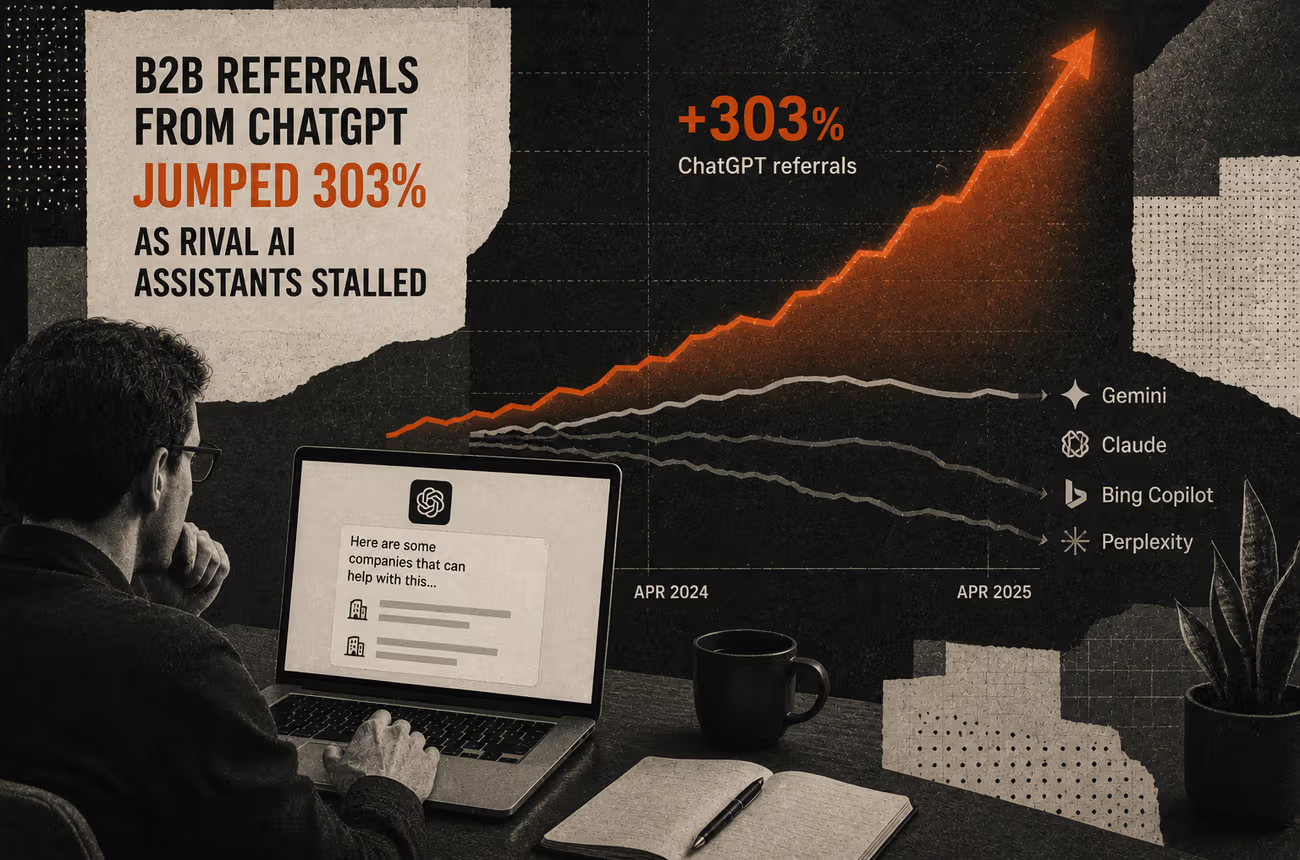
Referral visits from ChatGPT to the business-to-business web properties Demandbase measures rose nearly fourfold in a year, from roughly 645,000 a month in June 2025 to 2.6 million in June 2026. The account-based marketing vendor published the figures on 12 August, presenting them as evidence that AI assistants have become a fast-growing source of traffic and inbound leads.
The number that matters most to a marketing manager, though, is not the growth rate. It is how narrowly the growth is concentrated. Demandbase reported that Perplexity referrals fell over the same period, while Gemini and Claude stayed flat, leaving ChatGPT as the overwhelming driver of B2B AI referral traffic. A channel that lives almost entirely inside one company’s product is a very different proposition from a diversified one, particularly when that company has already shown it will change how the channel works without warning.
What did Demandbase actually measure?
Demandbase measured referral traffic across its own customer platform, not the B2B web as a whole. The figures come from Labs by Demandbase, the company’s research arm, and draw on data collected between 1 June 2025 and 31 July 2026 across 1,584 separate Demandbase instances, more than 11 billion website visits, and 75,645 advertising campaigns representing over $123 million in media spend. Referral traffic, in this analysis, means an attributable visit generated when someone clicks a link from an AI assistant.
That is a narrower thing than AI influence overall, and the distinction changes how the number should be read. Separate analysis from Similarweb has found that much AI-influenced traffic arrives later, through branded search, rather than through a direct referral link, which means referral counts understate the effect rather than capture it fully. The Demandbase figure is best treated as one visible slice of a larger shift that remains hard to measure, not a full account of it.
Demandbase also did not explain the sharpest movement in its own data. Referral volume more than doubled in May 2026 against prior months, and the company attributed the jump to no product change at OpenAI, no shift in its customer base, and no adjustment to its own measurement. An unexplained doubling inside a single month is a reason to watch the channel closely, not to extrapolate from it.
Why does the concentration matter more than the growth?
ChatGPT has already shown how quickly a single retrieval change can reset the channel. After 21 July 2025, outbound referral traffic from ChatGPT to external sites fell by about 52% within weeks, according to analysis by Profound that was widely reported at the time. Use of ChatGPT itself kept rising through the period, so the fall was not about fewer users. It followed a change in how the assistant selected and weighted sources, tilting toward answer-first destinations such as Reddit and Wikipedia and away from branded pages.
Nothing in the Demandbase data removes that risk; the growth sits on top of it. A 303% rise measured to June 2026 describes where the channel has been, not where it will stay, and the mechanism that produced the July 2025 fall, an engineering decision inside one company, has not changed. Teams that treat ChatGPT referrals as a durable, compounding source of pipeline are betting that OpenAI’s retrieval choices hold steady, and the recent record gives little reason to assume they will.
The growth is real and the channel is worth tracking. Building a content strategy around a single assistant that can halve its own referrals on a configuration change, however, is a fragile plan rather than an ambitious one.
What should marketing teams do with a number like this?
Marketing teams should treat AI referral traffic as a channel to measure, not a foundation to rebuild around. The practical implication of the Demandbase data is narrow and useful: AI assistants now send enough traffic to B2B sites to be worth tracking separately from general organic and paid visits, so that the channel’s contribution, and its swings, are visible rather than buried in an “other” bucket. That is a measurement task, and a manageable one.
Demandbase’s own reading goes further, and here the vendor’s interest shows. Rachel Truair, its chief marketing officer, said much AI-driven discovery now happens before a buyer reaches a brand’s website, making it “more important than ever” for marketers to reinforce their brand across the channels they control, from advertising to sales engagement. Demandbase sells several of those channels, and its data also recorded connected-television ad spend on its platform more than doubling over the year and display spend rising 55%. The advice to diversify a media mix is reasonable on its own terms, but it is also the company’s product pitch, and the two are worth reading apart.
The steadier conclusion is the one the number supports without help. Being visible in AI answers is now worth deliberate effort, and the returns can be strong, with separate studies finding that leads arriving through AI search convert at markedly higher rates than those from traditional search. But no reliable method yet lifts visibility consistently across engines, and the traffic that does arrive is concentrated in an assistant with a demonstrated ability to move. The measured response is to track the channel closely and spread the sources of discovery, not to stake a quarter’s content plan on one company’s ranking logic.
Demandbase closed its data collection on 31 July 2026, so the figures stop short of showing whether the trend held through the summer. The company has not said what caused the May spike, or whether it expects the growth to hold.