Awin partners with ScalePost to measure AI-led discovery last-click misses
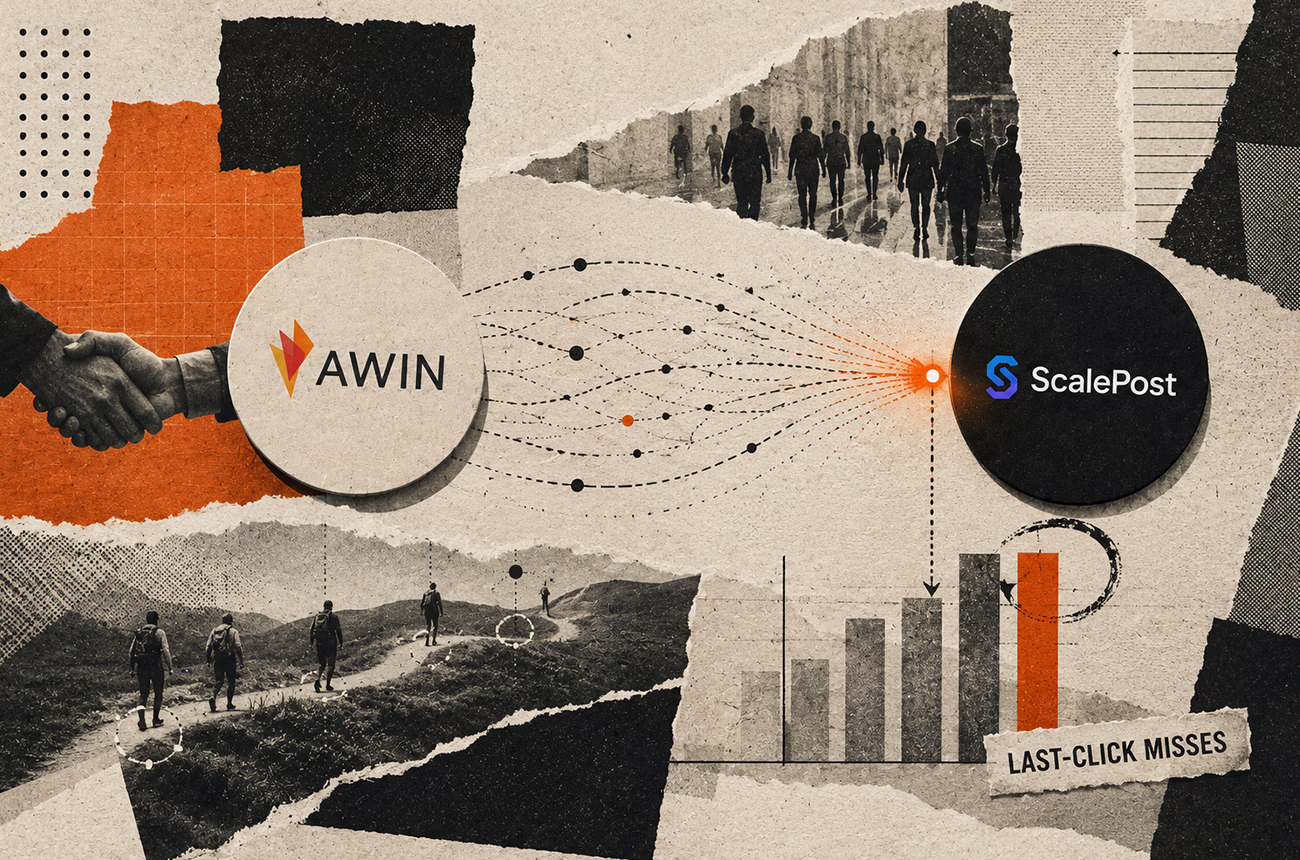
Awin’s pitch on 30 June was not that it had added more AI features, but that it could finally count something marketers have been unable to see: the moment an AI assistant reaches into a publisher’s page and uses it to describe a brand. The affiliate marketing platform announced a partnership with the AI-measurement firm ScalePost, alongside two platform changes, an AI Visibility capability and a natural-language partner-discovery tool called Smart Search, framed around a single problem. Discovery, Awin argues, is moving into “increasingly invisible, zero-click environments” where conventional tracking sees little.
The announcement lands at an awkward moment for marketing budgets. Marketing teams are under pressure to justify spend while a growing share of brand discovery happens inside search engines, social feeds and AI assistants that rarely send a referral click. Awin says around two-thirds of Google searches now end without a click, a figure it cites without naming an original source. When the measurable conversion shows up as branded search, direct traffic or a retailer visit, the content and partnerships that created the demand can look worthless on a last-click report, and become the first line item cut.
What Awin and ScalePost have actually launched
Awin’s AI Visibility capability rests on ScalePost’s method of recording when AI systems fetch a publisher’s content. ScalePost works from publishers’ first-party content delivery network (CDN) logs, the server records of what was requested and by which system, to count real AI fetches rather than estimating visibility by repeatedly submitting test prompts to chatbots. The company, founded in San Francisco in 2024, says it integrates with CDN providers including Cloudflare, Fastly and Akamai, and already works with publishers such as Time and Apartment Therapy. Awin is layering this onto its existing collaborations with the AI-visibility platforms Peec AI and Profound.
The distinction Awin is drawing is between two ways of measuring AI visibility. One submits a chosen set of prompts to models such as ChatGPT, Claude, Perplexity and Gemini and logs which brands appear, a synthetic sample. The other reads CDN records showing that an AI crawler or agent actually retrieved a specific page. Awin and ScalePost argue the second is more defensible because it records real behaviour rather than a simulated set of questions. The argument is reasonable, but a fetch is a narrow fact: it shows a system retrieved a page, not that the page appeared in an answer a person read, nor that it shaped what that person did next.
Why conventional attribution misses AI-led discovery
Last-click attribution misses AI-led discovery because the assistant rarely delivers the click that attribution counts. A buyer can ask an assistant for options, absorb a recommendation drawn from a publisher’s review, then search the brand by name or go straight to a retailer days later, leaving the publisher’s influence uncredited and the closing channel over-credited. Awin frames its tools as a way to surface that hidden upper-funnel work before the budget behind it is cut.
The wider market data points the same way, though none of it proves Awin’s specific case. NIQ reported on 26 June that nearly one in three Western consumers now buy products they first discovered on social platforms, and that 42% have used an AI tool to shop in the past month, evidence that discovery, evaluation and purchase increasingly span different surfaces. A June 2026 preprint, “From Prompt to Purchase”, joined opt-in clickstream data to the same users’ ChatGPT, Claude and Gemini conversations and found that when an assistant recommended a brand to someone with no recent engagement, that person’s same-name searches and visits to the brand’s own site rose measurably afterwards. The authors call it an “acquisition-like effect” that standard referral systems miss. Two caveats sit beside it: the paper is a non-peer-reviewed preprint, and it was written by staff at Scrunch AI, a company that itself sells AI-visibility measurement.
What a fetch can and cannot prove
The harder questions sit in the gap between a fetch and a sale. Awin makes two commercial claims for the new tools: that accounting for AI interactions can raise the engagement marketers observe by three to six times, and that advertisers using Smart Search are twice as likely to invite a partner as those using its conventional directory search. Both are Awin’s own figures. The announcement does not give a sample size, a comparison period or a definition of engagement, nor does it say whether the increase reflects more commercial activity or simply more measurement of activity that was already happening.
For publishers, the appeal is more direct. ScalePost’s own pitch is that publishers are “driving AI visibility they aren’t being paid for”, and that verified citation counts could let them charge for upper-funnel influence across affiliate deals and sponsored content. Whether that materialises depends on questions the launch leaves open: whether ScalePost can reliably separate a training crawler from a live agent answering a user, whether a fetch will ever be tied to a specific conversion, and whether publishers must sit behind a supported CDN to be counted at all.
For now, AI Visibility is a reporting layer, not a payment mechanism. Whether it becomes the basis on which publishers are eventually paid for AI-mediated discovery, or remains a sharper picture of demand that still closes, and gets credited, somewhere else, is the question Awin has not yet answered.