Amazon puts the checkout inside Alexa as AI assistants become an ad channel
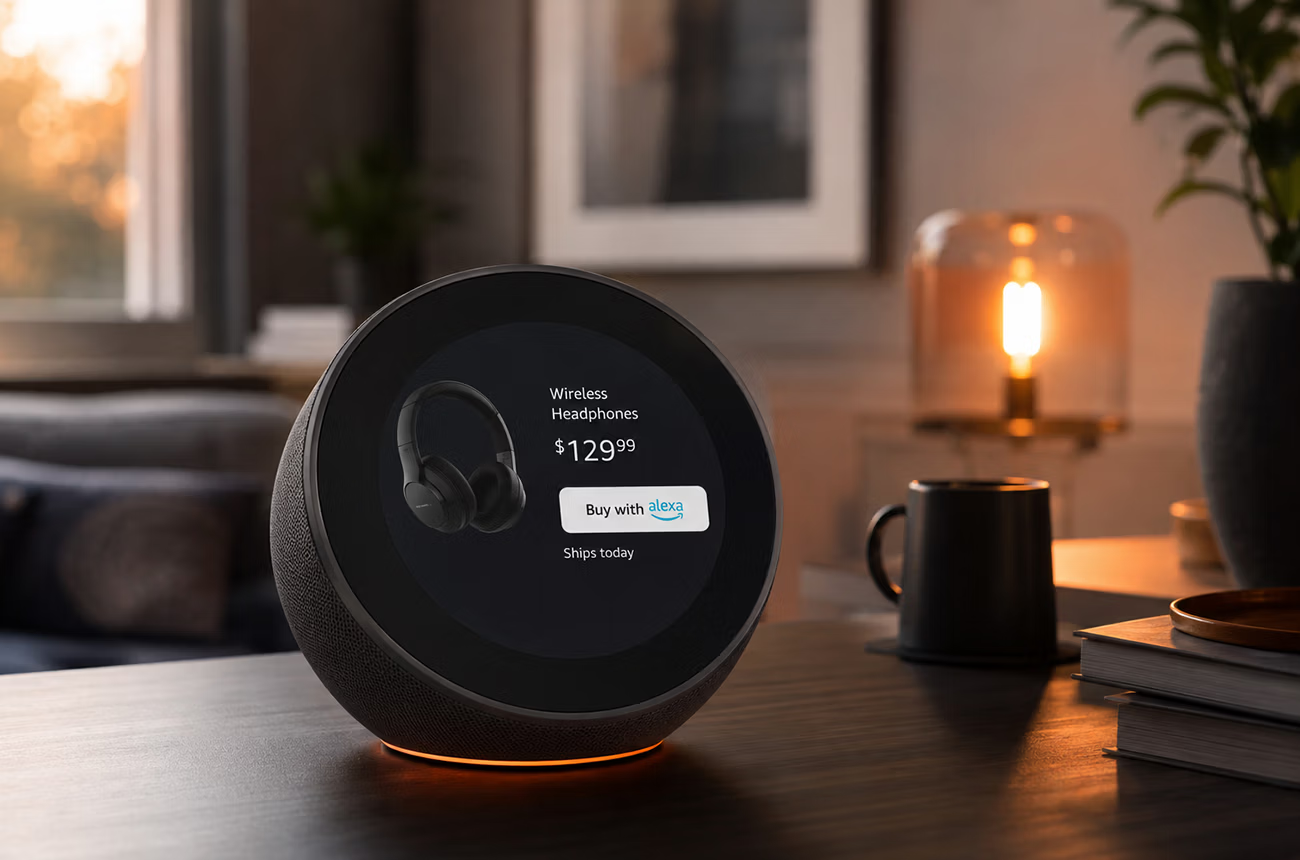
Amazon spent Prime Day week turning a conversation with Alexa into a checkout. Announced at Cannes Lions and rolled into beta in late June, Alexa+ Agentic Ads let a shopper see an advertisement on an Echo Show, ask questions out loud, weigh the options and complete the purchase — a Papa Johns order, a concert ticket — without ever leaving the conversation.
The launch is the clearest sign yet that the AI assistant is becoming a place to buy, not just a place to ask. It arrives months after OpenAI began testing ads inside ChatGPT and as Google prepares to put advertising into Gemini: the same agentic shift that has assistants booking, scheduling and navigating software on a user’s behalf is now pointed at the till. For marketing teams the consequence is structural rather than tactical, because the click — the unit digital advertising was built to measure — begins to disappear once the conversation itself is the path to purchase.
What Alexa+ Agentic Ads actually do
Alexa+ Agentic Ads carry a shopper from an advertisement to a completed transaction inside a single spoken exchange. A customer sees a prompt on an Echo Show screen, refines the choice by voice — seats, toppings, the number of tickets — and pays without a click, a QR code or a second screen. Amazon describes it as the first agentic ad format running at scale, and has opened the beta with a closed list of partners: Papa Johns for food ordering, and the artists Beck, Jill Scott and Omar Courtz for concert tickets delivered to a Ticketmaster account.
What makes the format “agentic”, in Amazon’s framing, is that a large language model holds the back-and-forth itself, answering questions in natural language rather than running scripted advertiser prompts. Charlotte Maines, Amazon’s vice-president of content and advertising for Alexa, said the unit is meant to “close the gap between intent and action” by letting a customer move from curiosity to a completed order in one conversation.
The reporting is narrower than the pitch, and the distinctions matter. The format is live in beta on Echo Show devices only; Amazon has not disclosed pricing, the partner list is closed, and a planned expansion to Fire TV is announced rather than live. The company’s stated “firewall” between Alexa conversation data and its advertising stack is its own position, not something an outside party has audited. Even so, Amazon is not alone: OpenAI began testing ads in ChatGPT in February, placing sponsored results in a tinted box for users on the free tier and its $8 ChatGPT Go plan, and has since widened the pilot, including into the UK; Google used Google Marketing Live in May to sketch an AI-native advertising ecosystem and has said it will bring ads to Gemini in 2026. The commercial layer is forming across every major assistant at once.
Why marketers are spending on visibility, not ad slots
Marketers are directing new money toward being recommended by AI assistants rather than buying their new ad units. Conductor’s 2026 State of Content report, drawn from a January survey of more than 450 content marketers, found 87% planning to raise content budgets this year and nearly one in four now treating large language models as the primary audience for most of their content, with original research and proprietary data ranked the top priority for appearing in AI-generated answers. Generative engine optimisation — structuring content so an assistant cites and recommends a brand — is already in use at four in ten companies, according to the Duke University CMO Survey.
The logic is partly that the metric is missing. With the click gone, transaction completion becomes the measure, and several advertisers have said they will not move serious budget until something credibly replaces click-through. It is also strategic: inside an assistant the recommendation is the shelf, and a brand that cannot earn the organic recommendation is, as one agency executive told Digiday, “wasting their money on a paid piece”. That is the same instinct that built search engine optimisation, now aimed at a surface where the answer, not the results page, is where the sale begins.
For a B2B SaaS marketing manager the read is steadier than the headlines around agentic advertising suggest. The work that decides whether a product is surfaced when a buyer asks an assistant to compare tools (clear, original, well-structured content, and a credible presence across third-party sources) is work marketing teams already understand. The channel is new; the discipline is not.
The readiness gap that puts the foundation at risk
Marketing budgets are flat, and AI is being funded by moving money off other lines, including the content and visibility work that decides whether a brand appears inside an assistant at all. Gartner’s 2026 CMO Spend Survey, fielded among 401 marketing leaders mostly at companies above $1bn in revenue, found AI now takes 15.3% of marketing budgets while only 30% of CMOs judge their organisation ready to scale it. With marketing holding at 7.8% of company revenue, that AI spend is reallocation, not growth: 56% of respondents said they lacked the budget to deliver their 2026 strategy, and 54% said they lacked the resources.
The constraint is organisational, not a failure of marketers. The Duke University CMO Survey found adoption running ahead of readiness, with no marketing-technology capability scoring above five on a seven-point scale and training budgets cut to 3.8% of spend. The barrier most CMOs name is data, process and talent, not ambition or skill. The danger in that gap is specific: the content, structure and data that earn an assistant’s recommendation are exactly the line items easiest to raid to pay for a tool licence, which means a team can fund its way into AI tools while quietly defunding the thing that gets it recommended inside them.
That is the trade-off marketers are left holding as the assistant turns into a sales channel. The teams that keep investing in original content and clean, citable information are the ones likely to still be in the conversation — literally — when buyers stop typing queries and start asking an assistant to decide.
Amazon has not disclosed what Alexa+ Agentic Ads cost, has kept the partner list closed and describes its move to Fire TV as planned rather than live. The measure that would let a marketer value a completed conversation the way they once valued a click does not yet exist — the unresolved question every brand weighing the channel now has to answer for itself.